
Surface stains or internal shade?
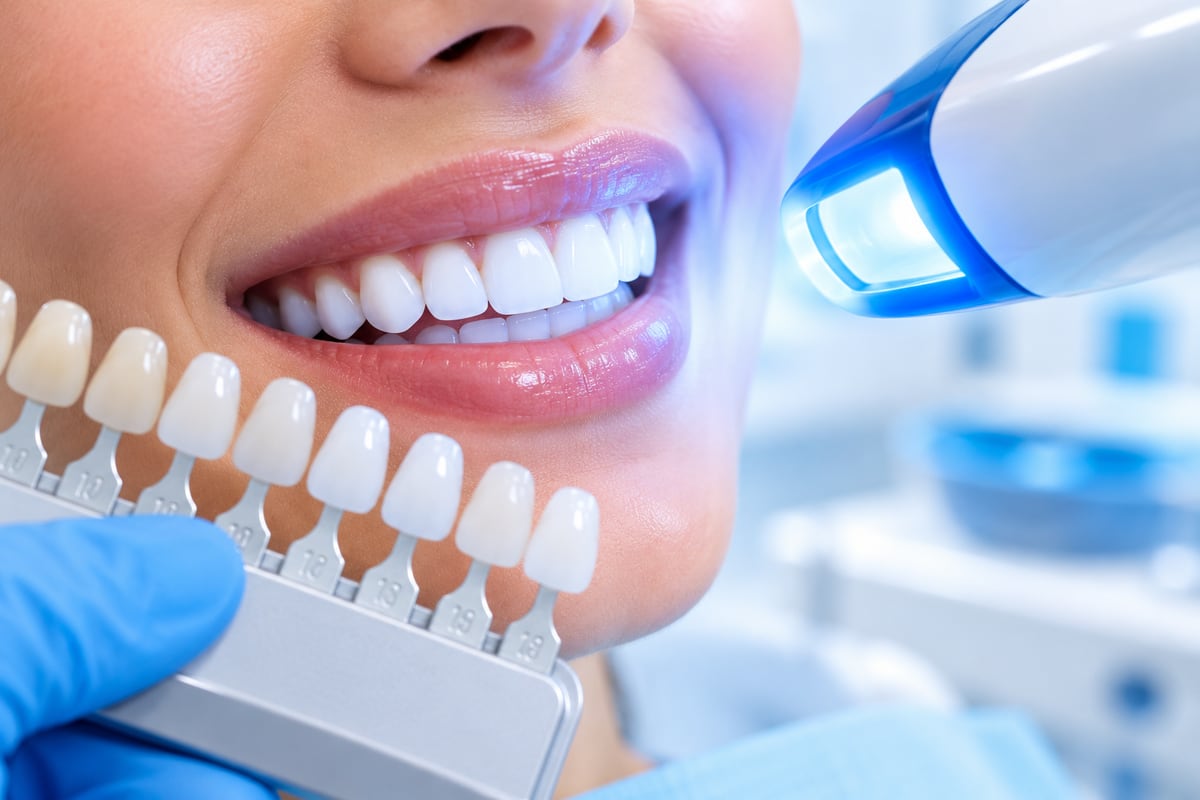
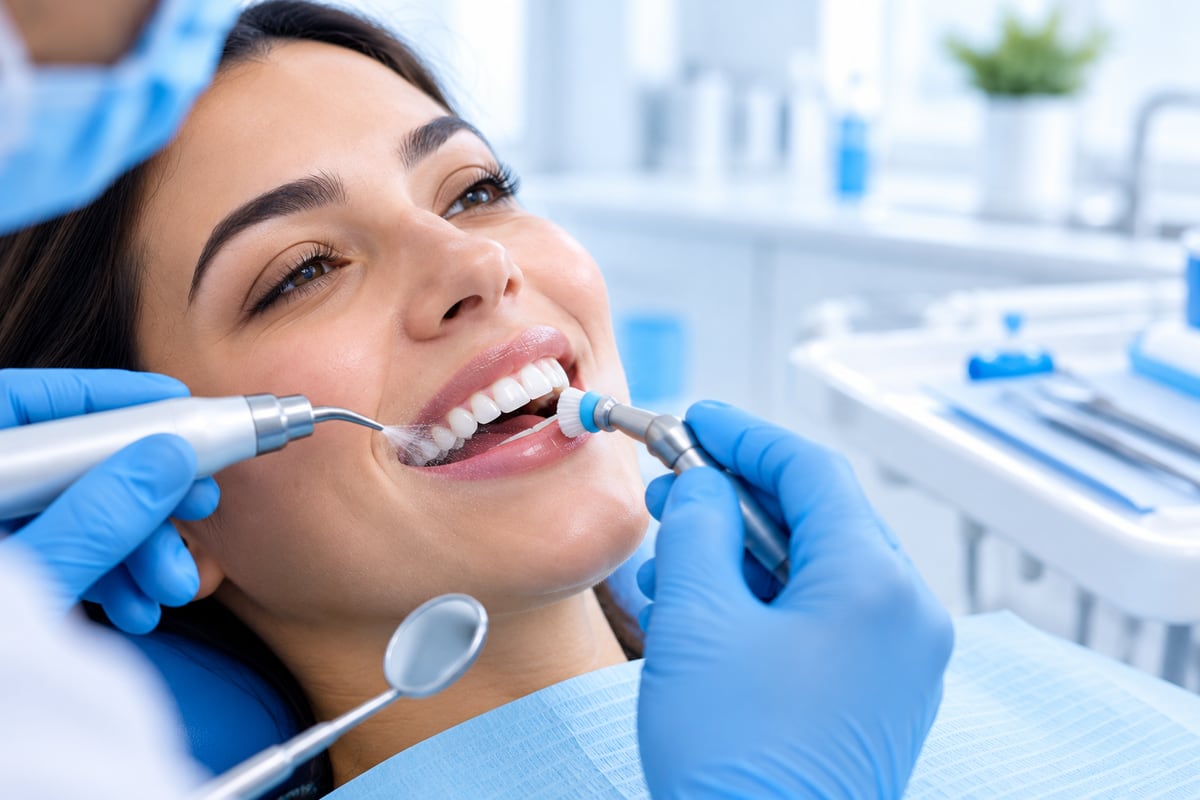
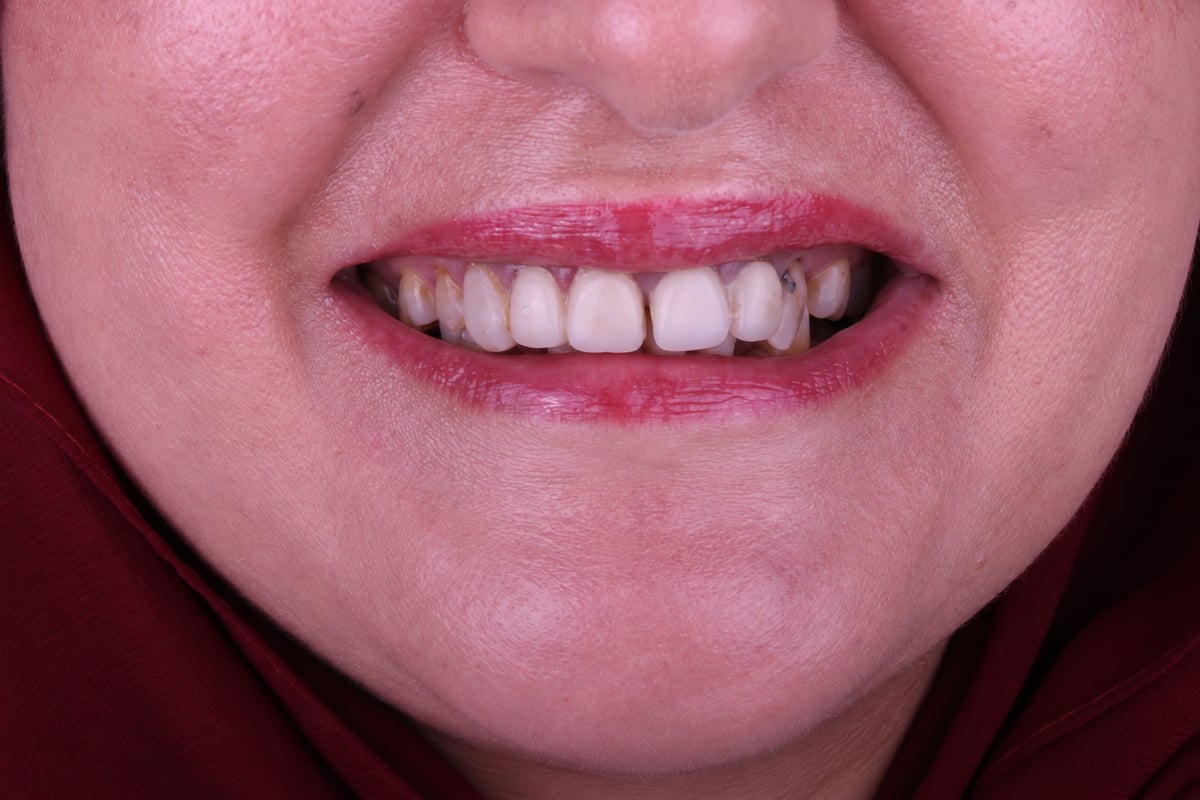
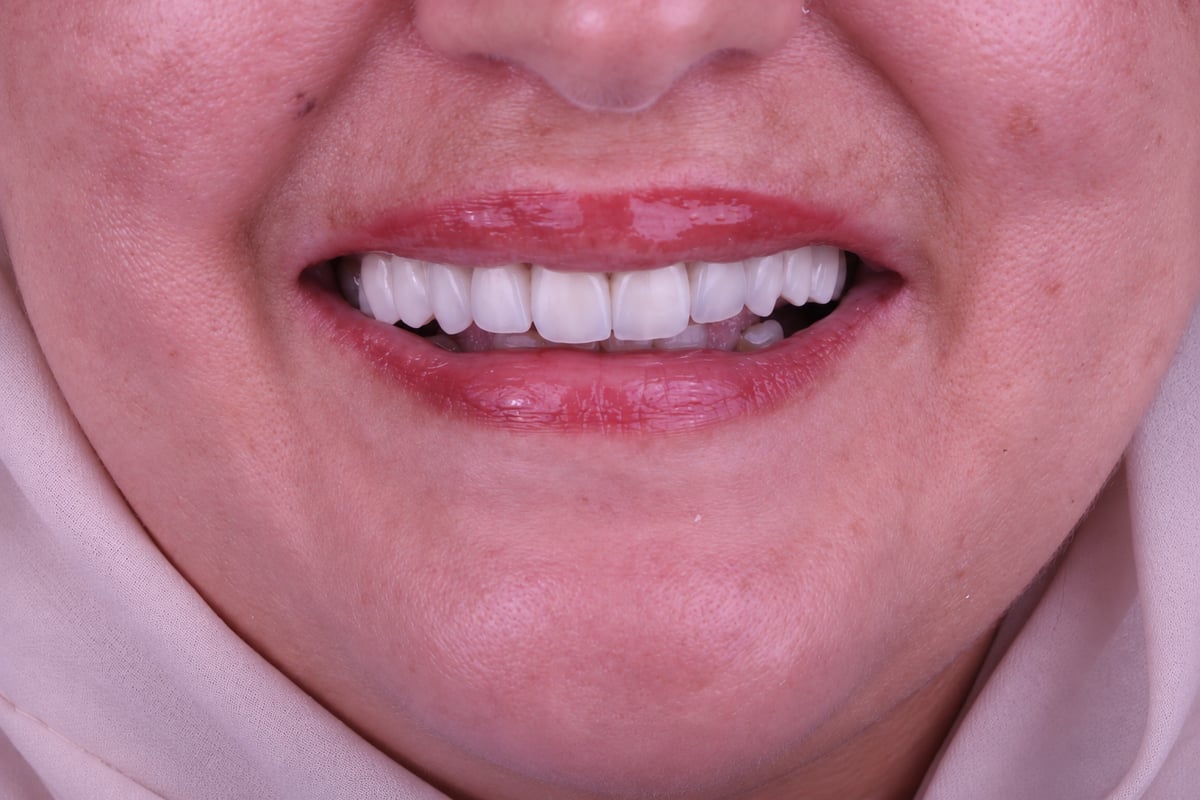
There is an important difference: surface stains from tea, coffee and smoking are removed by scaling and polishing, while the internal shade of the tooth is what whitening changes. That is why we examine first — many people pay for whitening when a cleaning visit is all they need.
Available options
- In-clinic whitening: one or two high-concentration sessions under supervision with gum isolation — the fastest visible result.
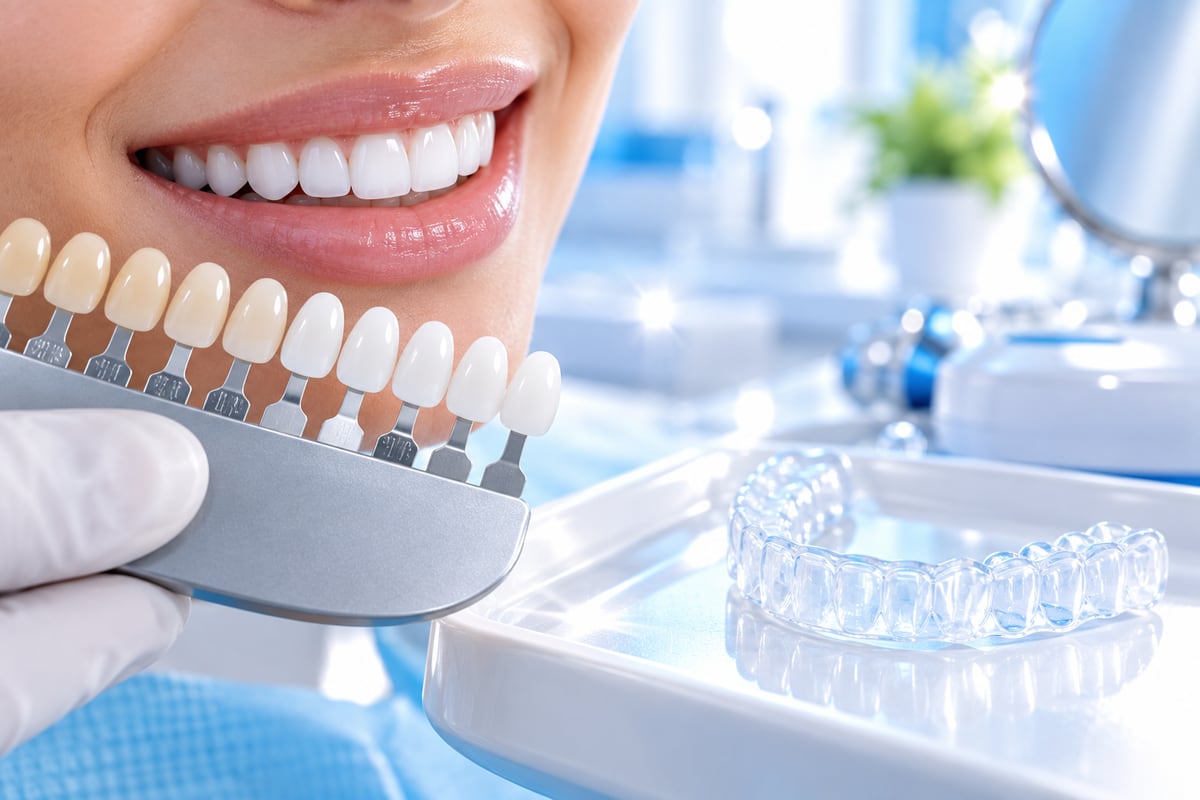
- Home trays: custom trays used daily for a set time, giving a gradual result with less sensitivity.
- Combined protocol: an in-clinic session followed by home trays to hold the shade.
- Over-the-counter pastes and strips: limited to surface stains and do not change the internal shade.
Is whitening harmful?
Supervised whitening at an appropriate concentration does not damage enamel. Temporary cold sensitivity for a day or two is common; we reduce it with a desensitising paste beforehand and by avoiding very cold drinks afterwards. Harm comes from unknown products or repeated unsupervised use.
How long does it last?
Usually one to two years depending on habits. Tea, coffee, smoking, red sauces and dark juices bring stains back fastest. A scaling and polishing visit every six months preserves the shade for longer.
Who should postpone whitening?
- Pregnant and breastfeeding patients (better postponed).
- Children under 16.
- Anyone with active decay or gum inflammation, until it is treated.
- Severe chronic tooth sensitivity, which needs assessment first.