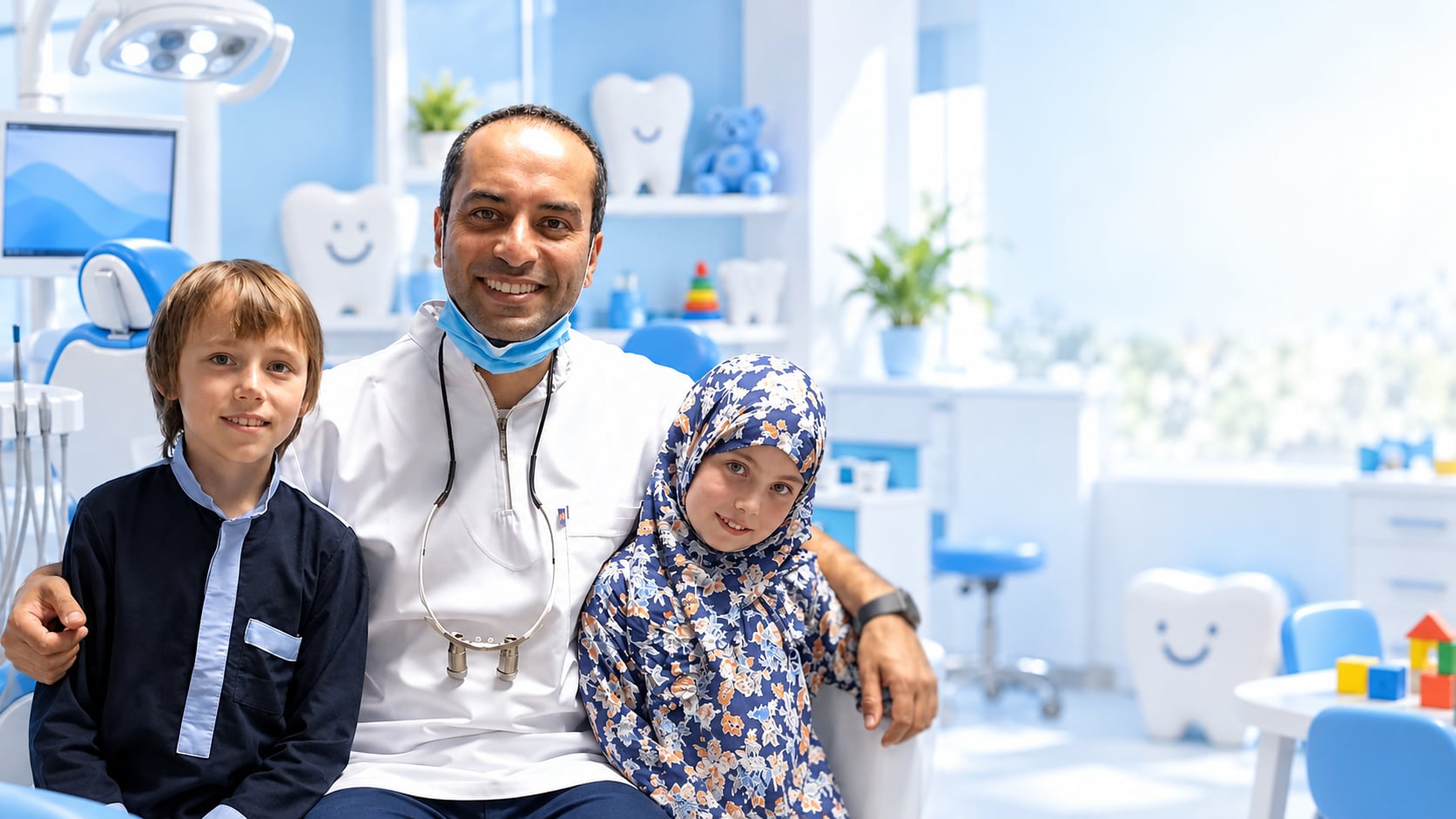
When should the first visit be?
The general recommendation is a first visit when the first tooth appears, or by the first birthday, and no later than age two. Early visits are usually a simple check plus guidance for parents on cleaning, feeding and sugar, and they let the child get used to the place before any treatment is needed.
Do baby teeth really matter?
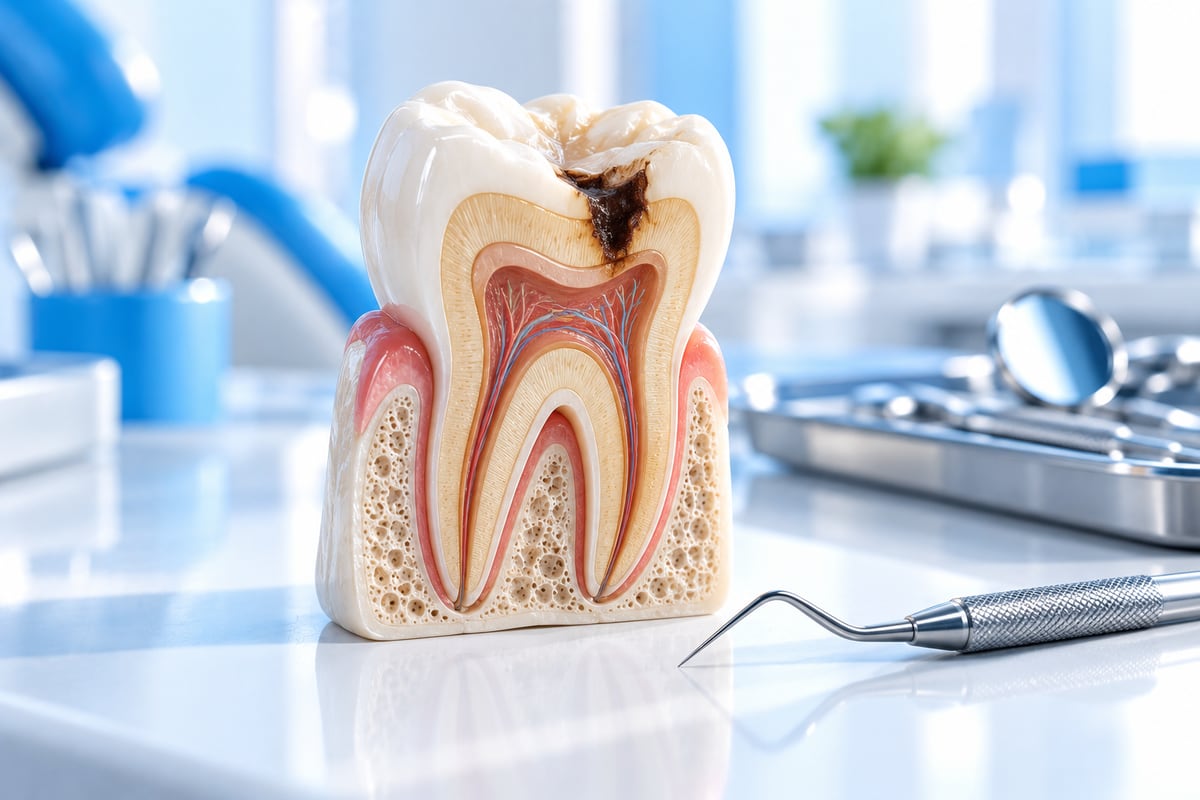
Yes. Baby teeth support chewing and speech and hold space for the permanent teeth. Neglected decay causes pain and abscesses, can affect the permanent tooth underneath and leads to crowding that needs longer orthodontic treatment later. Treating them is far simpler than dealing with the consequences.
What our pediatric service covers
- Routine check-ups and monitoring of jaw and tooth development.
- Cleaning, polishing and fluoride applications.
- Fissure sealants to prevent decay in molars.
- Fillings for baby teeth with child-appropriate materials.
- Pulp treatment for baby teeth and stainless-steel or tooth-coloured crowns when needed.
- Simple extractions when necessary, and space maintainers after early loss.
- Early orthodontic assessment from around age seven.
Preparing your child
- Talk about the visit simply and positively; avoid words like "it won't hurt" or "injection" — they plant the idea of fear.
- Pick a time when your child is rested and not hungry.
- Show a short video or book about visiting the dentist.
- Do not promise a big reward for "being brave" — keep it routine.
Brushing routine by age
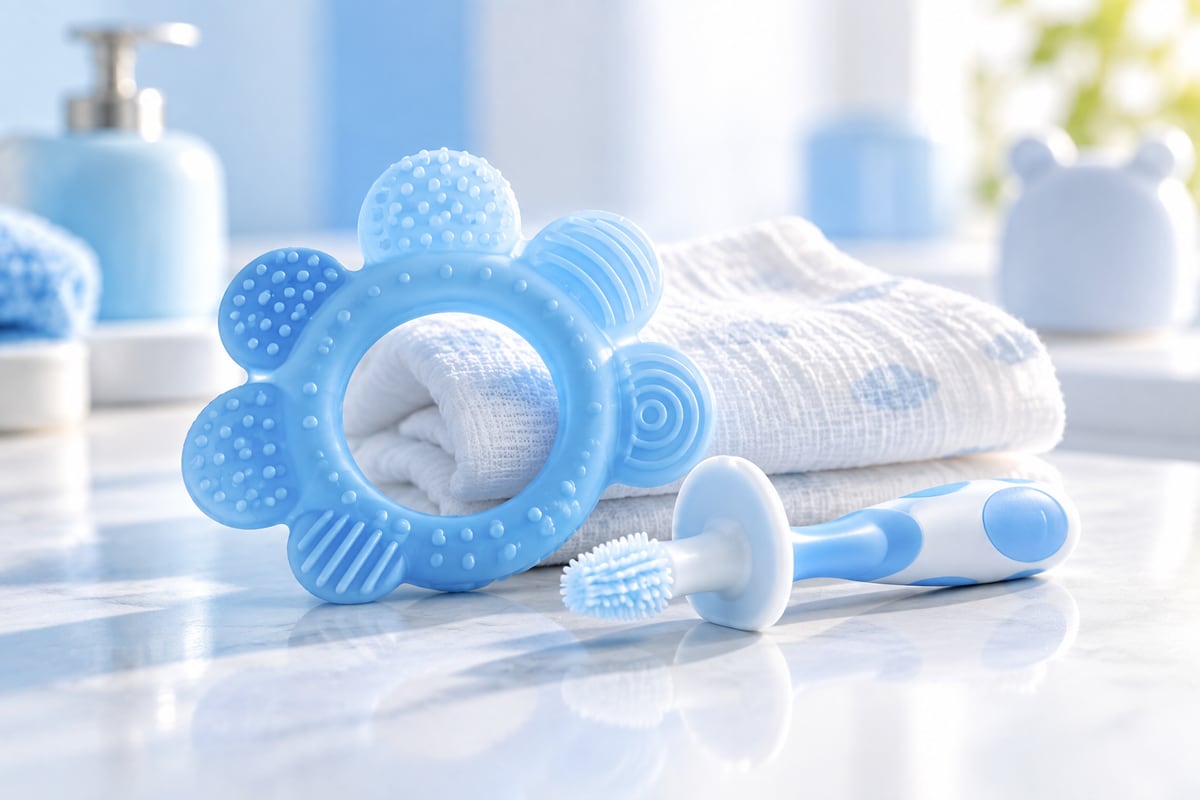
From the first tooth: wipe with gauze or a tiny brush. Ages one to three: a soft brush with a rice-grain amount of fluoride toothpaste. From three: a pea-sized amount, with a parent supervising brushing until at least age seven or eight, since a child's manual skill develops late.