Whitening is among the most requested cosmetic dental procedures and the one most burdened by unrealistic expectations. Much of the disappointment afterwards comes from not knowing, beforehand, what kind of discolouration you have and what is achievable in your case. This guide explains the real differences between the options, what determines the price, and how to know before paying whether your teeth will respond at all.
First: why are your teeth that colour?
- 1 Extrinsic surface stains from tea, coffee, smoking and dark sauces — removed by scaling and polishing, needing no whitening at all.
- 2 Natural intrinsic shade, which varies from person to person — this is what whitening actually changes.
- 3 Acquired intrinsic staining such as tetracycline banding, a discoloured root-treated tooth or fluorosis — difficult, and often needing different solutions.
The options
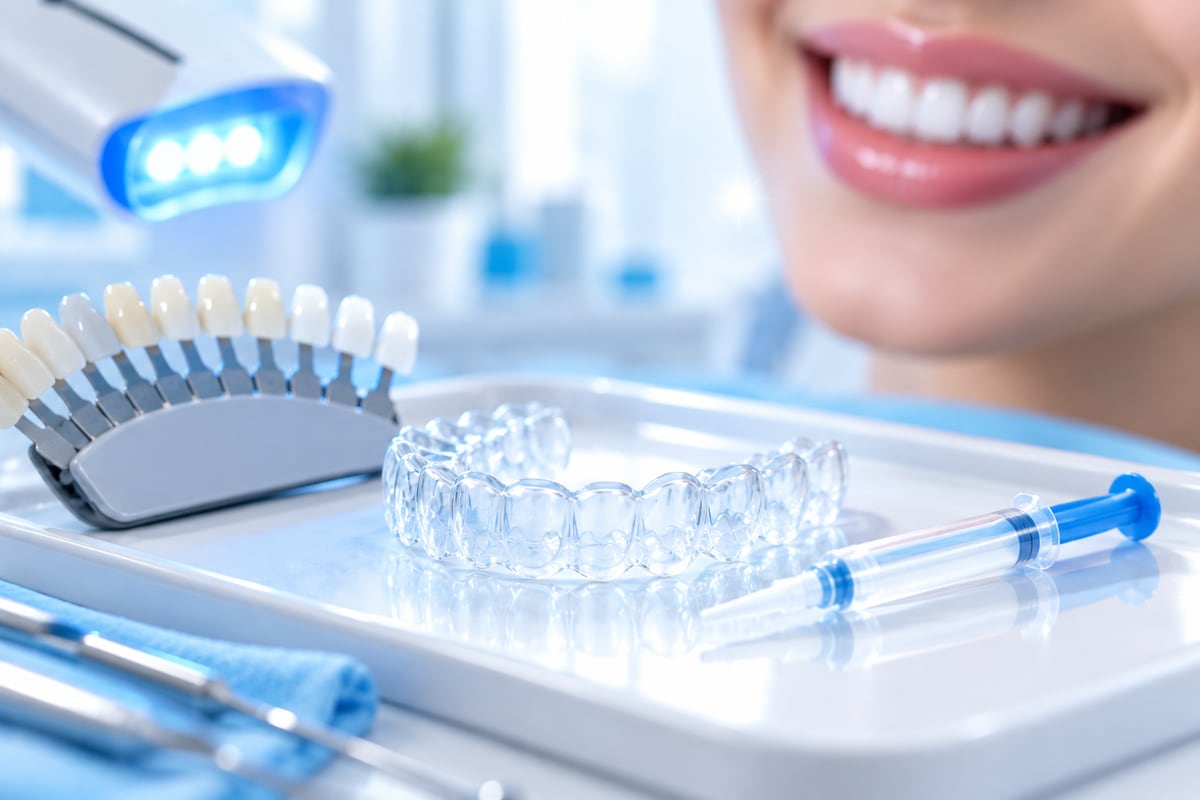
In-clinic whitening uses a high concentration under supervision with the gums isolated, taking 45 to 90 minutes and showing results the same day. Evidence that lights or lasers add much to the final outcome is limited — the chemistry does the work, so do not pay a large premium for the word "laser" without asking about concentration and number of applications. Custom home trays use a lower concentration for a set time daily over one to three weeks, giving a gradual result that often equals or beats a single clinic session with less sensitivity, and the trays stay with you for a short top-up a year or two later. A combined protocol gives the best result in deep or uneven discolouration. Over-the-counter strips and pastes work at very low concentrations mostly on surface stains.
What determines the price
- The system: in-clinic, home trays or combined.
- The number of sessions or the length of home use.
- The concentration and type of material.
- Whether custom trays are included — an extra cost that lasts for years.
- The preceding cleaning visit, usually charged separately and never optional.
- Any desensitising preparation before and after.
How many shades can you realistically gain?
Yellow-toned teeth respond better than grey or brown ones, and two to five shades on a standard guide is realistic for most people. Tetracycline staining is very resistant and may need months of tray whitening or a different cosmetic solution such as veneers. A single dark root-treated tooth is treated with internal bleaching rather than conventional external whitening.
Sensitivity after whitening
Sensitivity is the commonest side effect: the gel passes through enamel pores into dentinal tubules and temporarily stimulates nerve endings. It does not mean lasting damage — studies show it is transient, settling within one to three days. Use a desensitising toothpaste containing potassium nitrate for a week beforehand, tell your dentist about any gum recession or exposed roots, avoid very hot or cold drinks for the first 48 hours, shorten daily wear rather than stopping altogether with home trays, and apply fluoride or a remineralising paste afterwards. Sensitivity lasting more than a week, or confined to one tooth, usually points to decay or a crack rather than the whitening.
When whitening is a waste of money
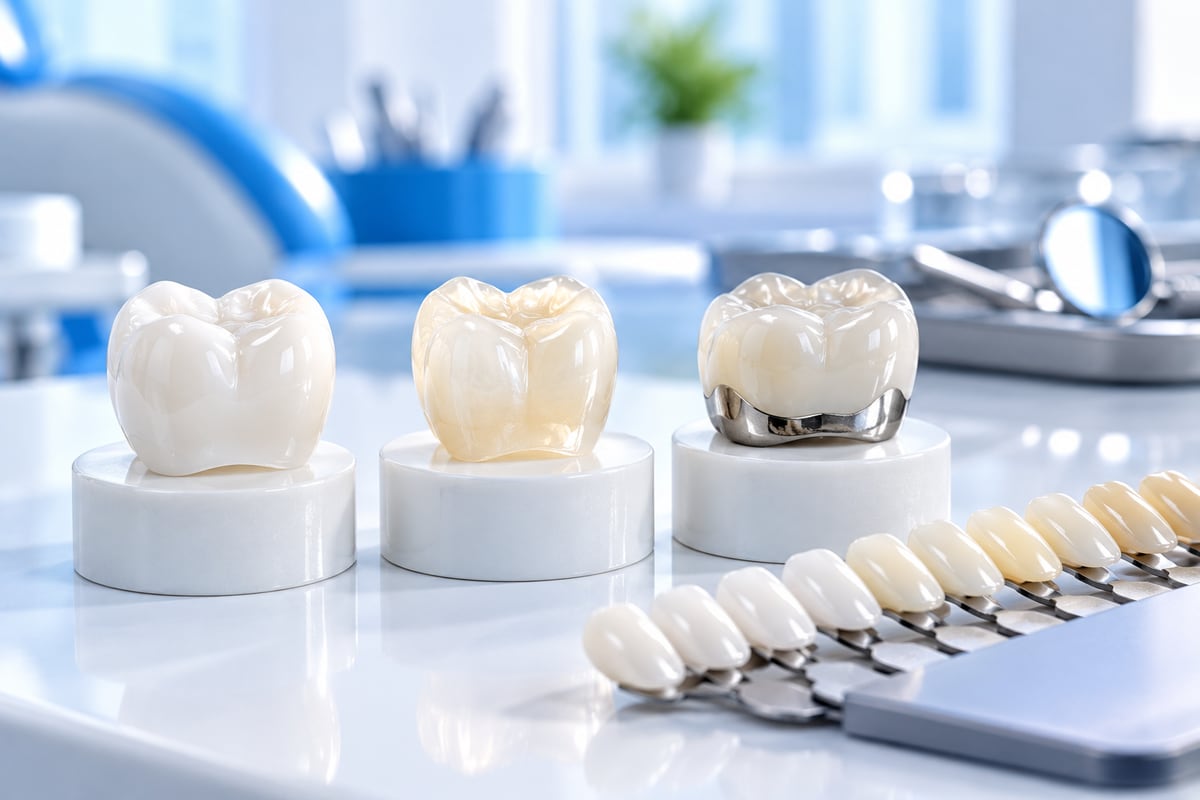
- Large front fillings or crowns, which do not lighten and become more obvious as the natural teeth brighten.
- Severe tetracycline staining, where response is very limited.
- Active decay or gum inflammation, which must be treated first.
- Unrealistic expectations — advertisement white usually comes from veneers, not bleaching.
- Significantly eroded enamel, where sensitivity rises and results disappoint.
Making the result last
- 1 The first 48 hours matter most: avoid tea, coffee, dark fizzy drinks, red sauces, turmeric and smoking entirely.
- 2 Use a straw for dark drinks afterwards.
- 3 Rinse with water after staining drinks rather than brushing immediately.
- 4 Have a cleaning every six months to remove surface stains before they build up.
- 5 Do a short tray top-up every year or two, at the cost of the gel only.
- 6 Stopping smoking is by far the biggest factor in how long the result lasts.
Sequence matters with restorations
Whitening agents do not affect any artificial material, so always whiten first and wait two weeks before selecting the shade of any filling, crown or veneer — the shade rebounds slightly and stabilises during that period. If you have old restorations you do not intend to replace, discuss this beforehand, because the mismatch becomes more visible.
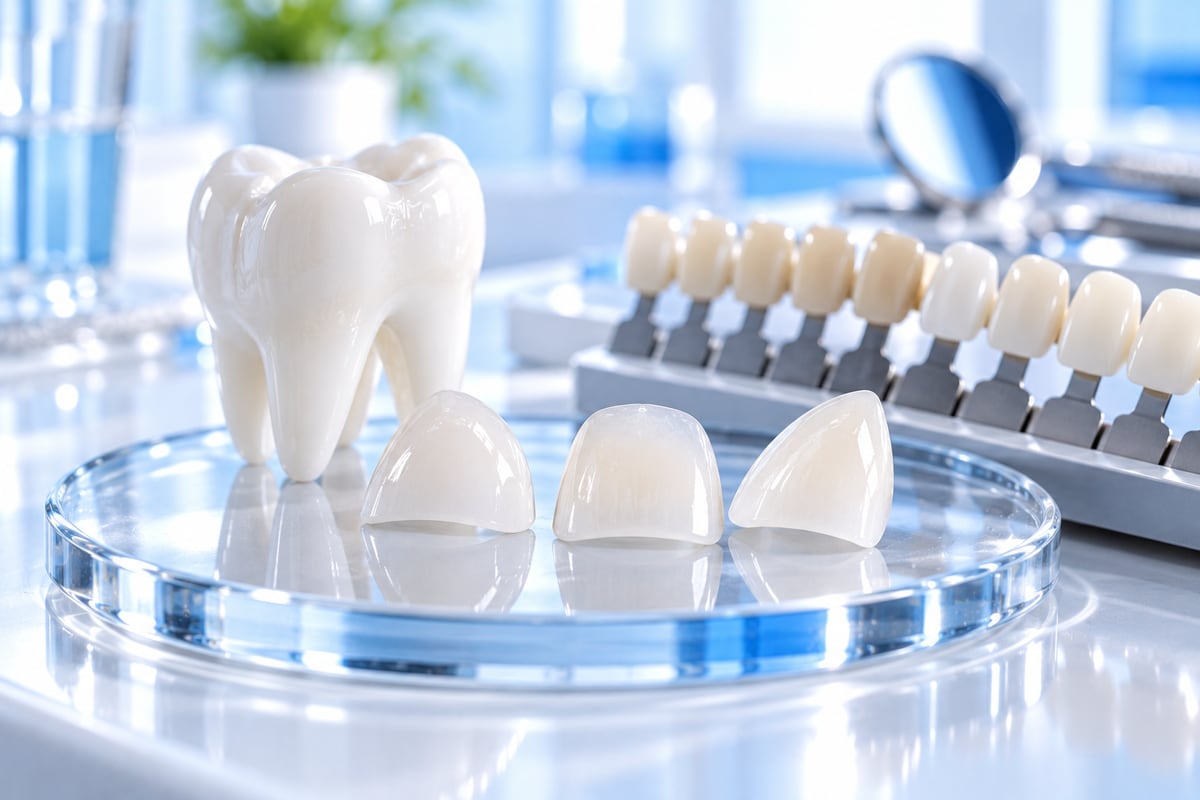
Reading the shade guide
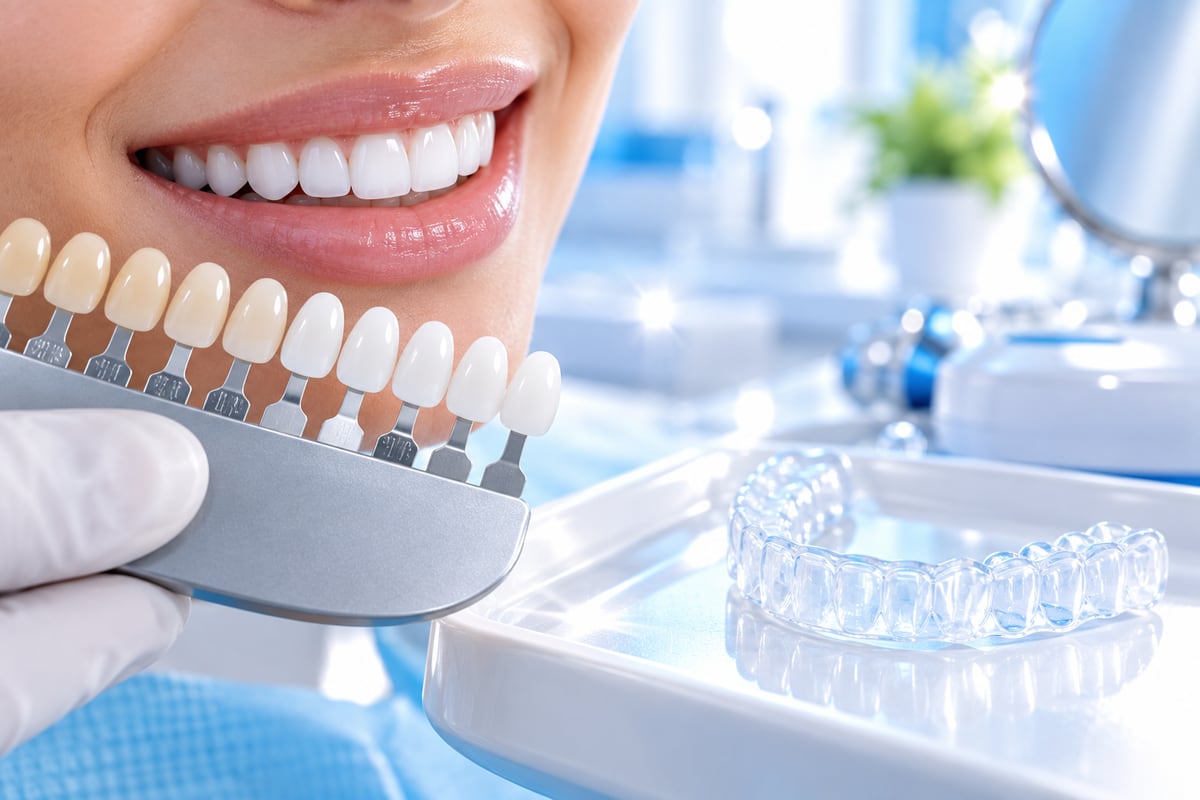
When a dentist says your shade moved from A3 to A1, they are using an international classification rather than an impression. Shades are grouped by hue: A (reddish-brown), B (yellow), C (grey) and D (reddish-grey), with numbers from 1 to 4 for intensity — the higher the number, the darker. A2 and A3 are the most common adult starting points; A1 and B1 are realistic, natural-looking targets after whitening; C and D shades respond least to conventional bleaching. Ask for your shade to be recorded before treatment and two weeks after, rather than judging in a mirror where a three-shade change can look modest.
Internal bleaching for a single dark tooth
A common mistake is trying to whiten a single dark front tooth externally. After old root canal treatment or trauma, blood and tissue breakdown products stain the dentine from within, so the problem lies deep in the tooth rather than on its surface. The solution is internal bleaching: the tooth is opened from behind through the root-canal access, the canal filling is confirmed and sealed with a protective barrier, whitening material is placed inside the pulp chamber and covered with a temporary filling, and the process is repeated every three to five days until the shade matches its neighbours. The tooth is then left a week for the colour to stabilise before a definitive sealed restoration. Results are usually excellent and save the patient a crown or veneer.
Whitening and orthodontics
- With fixed metal braces: wait until debonding — whitening around brackets leaves lighter or darker squares.
- With clear aligners: whitening during treatment is possible in some cases, with the orthodontist's agreement.
- Immediately after debonding: wait at least two weeks and have the teeth cleaned of residual bonding material first.
- White spots after braces are early decay, not colour; whitening highlights them, so they are treated with fluoride and remineralisation first.
Whitening for smokers
Smoking stains come in two layers: a thick surface deposit removed by scaling and polishing, and deeper staining that penetrates enamel and dentine over years. The first responds excellently, the second needs longer bleaching. The honest point is this: whitening while smoking at the same rate means the colour returns within months rather than years, so the best value comes from whitening alongside reducing or stopping smoking.
| System | Duration | Speed | Sensitivity | Durability |
|---|---|---|---|---|
| In-clinic session | 45–90 minutes | Immediate | Relatively higher | Good |
| Home trays | One to three weeks | Gradual | Lower | Excellent with top-ups |
| Combined | Session plus two weeks | Fast then stabilised | Moderate | Best |
| Over-the-counter strips | Two weeks | Limited | Variable | Short |
Questions to ask before you pay
- 1 What kind of discolouration do I have — surface staining, intrinsic shade, or deep staining that may not respond?
- 2 What result is realistic in my case, expressed as shades on the guide rather than "it will be white"?
- 3 Does the price include the preceding cleaning visit?
- 4 What concentration is used and how many applications per session? This matters more than the device.
- 5 Are custom trays included, what do they cost separately, and can they be reused for top-ups?
- 6 Will my front fillings need replacing afterwards to match, and at what cost?
- 7 What is the plan for sensitivity, especially if I already have it?
- 8 How many sessions are expected, and is a review visit included?
Whitening for teenagers
Demand among teenagers has risen sharply with social media, and it needs balancing against genuine clinical considerations. Pulp chambers are larger in recently erupted teeth, so sensitivity is greater than in adults. Full eruption of the permanent teeth matters, since whitening teeth at different eruption stages gives an uneven result. Parental consent and a realistic explanation are essential. Much teenage "yellowing" is accumulated plaque or surface staining, and white spots after orthodontic treatment are early decay that whitening makes more obvious rather than less — they need remineralisation or resin infiltration instead. Lower concentrations over longer periods usually suit this age group best.
Why results differ between people
- Enamel thickness: thicker enamel transmits light differently, while thin enamel shows the yellower dentine beneath whatever you do.
- Underlying dentine colour, which limits the final outcome when very dark.
- Type of staining: yellow tones respond markedly better than grey.
- Age: enamel thins and secondary dentine builds up, making teeth yellower and less responsive.
- Individual enamel permeability, which makes some teeth respond faster.
- Compliance, especially with home trays, where consistent daily wear makes an enormous difference.
Frequently asked questions
How much does whitening cost?
It depends on the system — in-clinic, home trays or combined — plus the number of sessions, the concentration and whether custom trays are included. Core service prices are published, and an accurate estimate follows a short examination.
Does whitening damage enamel?
Supervised whitening at an appropriate concentration does not. Damage comes from unknown products, unsupervised repeated use, or abrasive home recipes such as charcoal and baking soda.
How long does it last?
Usually one to two years depending on habits; smoking, tea and coffee shorten it, and a short home top-up restores the shade.
Will my fillings lighten too?
No. Artificial materials do not change, which is why front restorations are usually replaced two weeks after whitening to match the new shade.
Is laser whitening better?
The chemistry does the work; evidence that light or laser adds much to the final result is limited. Ask about concentration and applications rather than the device name.
The bottom line
Whitening is effective and safe when it follows a proper diagnosis, and disappointing when bought as a product without one. Start with a cleaning and a shade assessment, learn what kind of discolouration you have and what is achievable, and choose the system that suits your schedule and sensitivity rather than the best-marketed name. What preserves the result is not the brand of gel but your habits afterwards.
This article is general information for education only and does not replace an examination and diagnosis by a dentist. Every case is different, and the right treatment is decided by your dentist after an examination.
Have a question about your own teeth?
Book an examination at Dental Arts and the dentist will check your teeth and calmly explain the options that suit you.