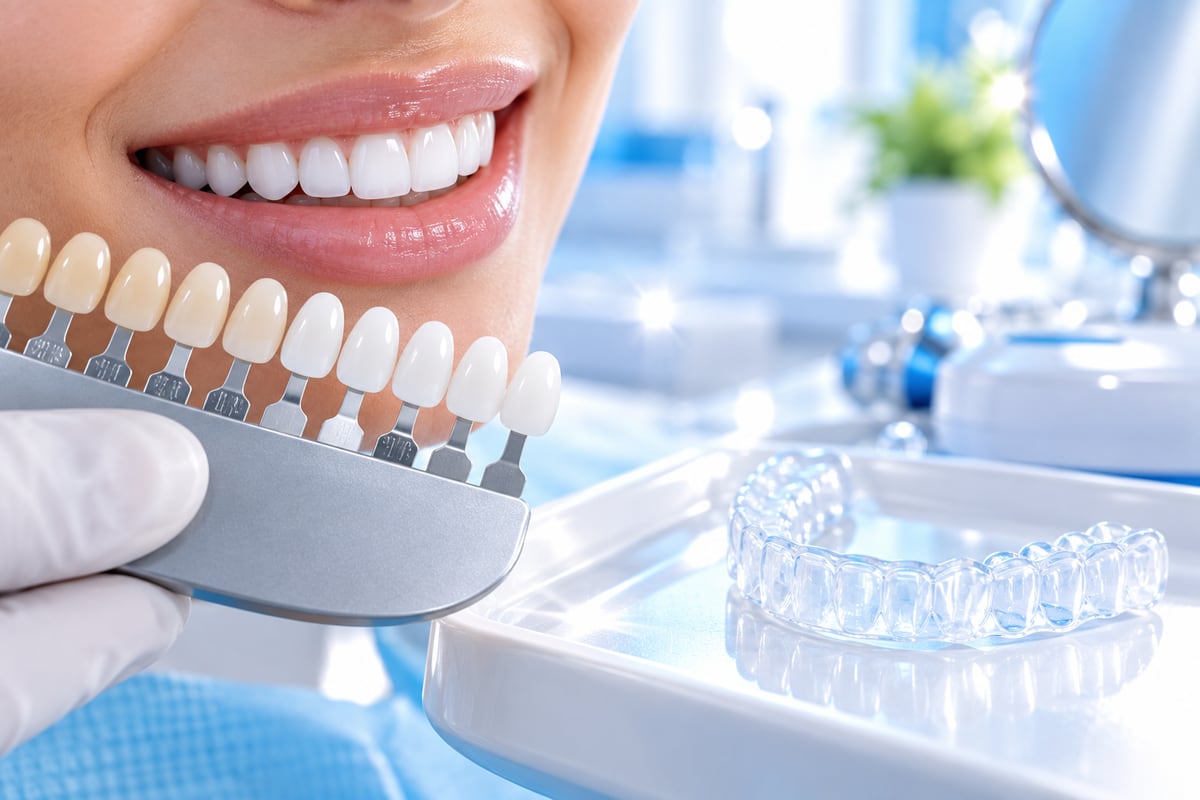
Veneers change a smile faster than almost any other cosmetic procedure, and they attract more debate than most because of one question: do they require filing the teeth down? The answer is neither a simple yes nor no — it depends on the type, the condition of your teeth and the result you want. This guide explains the real differences between the options, who is and is not a suitable candidate, and how a case is executed properly from diagnosis to bonding.
Veneers, laminates, composite and crowns
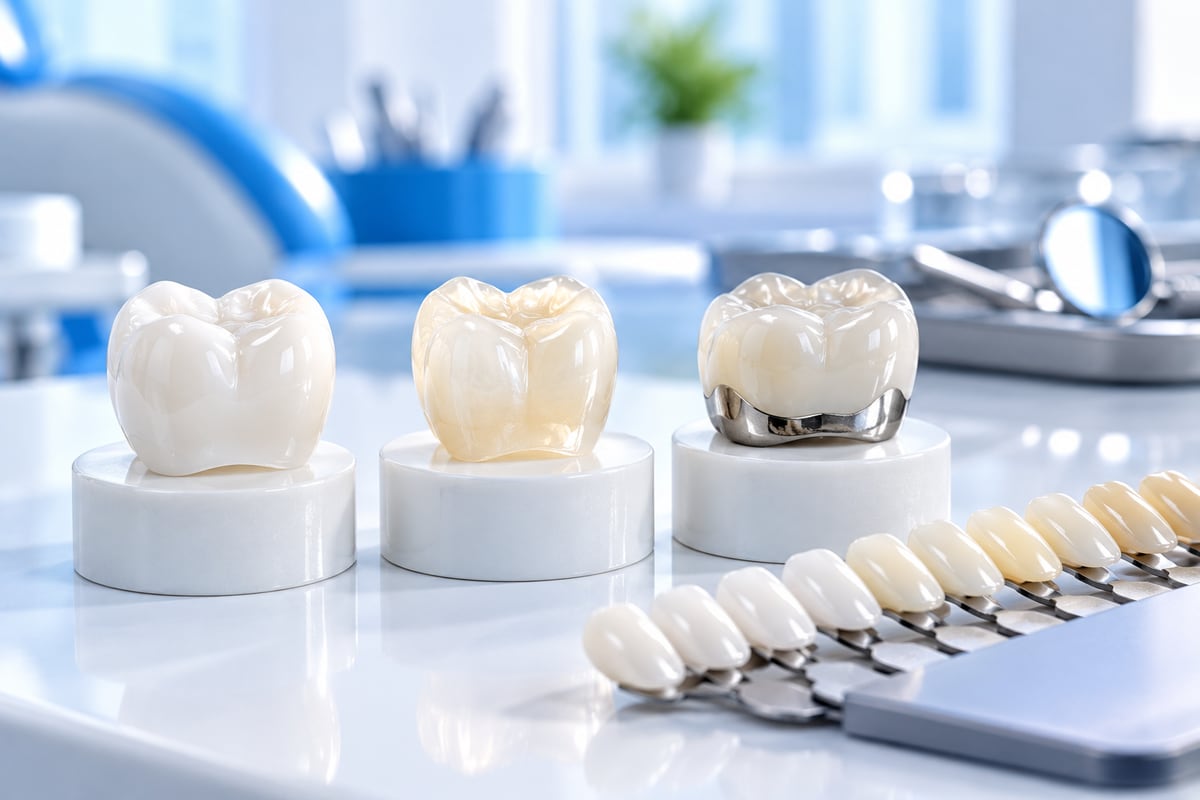
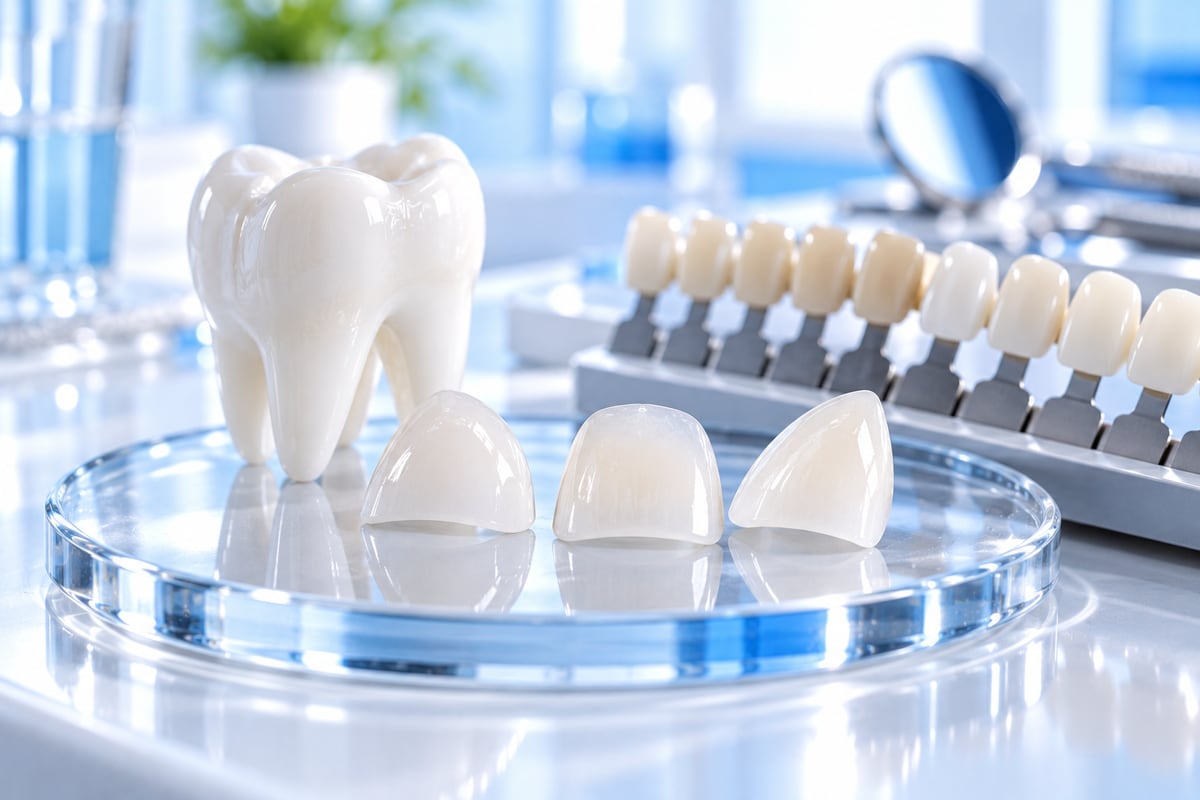
Porcelain veneers (e-max) are laboratory-made at roughly 0.5–0.7 mm and need preparation within that thickness so the teeth do not look bulkier afterwards; they hold colour for years and resist staining. Ultra-thin laminates, as little as 0.3 mm, allow minimal or occasionally no preparation — but "no-prep" is not a magic property. It suits teeth that are small, slightly retruded or spaced; adding a layer to a tooth already in a normal position without preparation simply makes it look thicker. Composite veneers are built directly on the tooth in a single visit: faster, cheaper and easily repaired, but less stain-resistant and shorter-lived. Zirconia crowns are not veneers at all; they are the safe option when a tooth is weak, fractured or root-treated — see types of dental crowns.
Who is a suitable candidate?
- Discolouration that does not respond to whitening, such as tetracycline staining.
- Spaces between the front teeth that the patient wants closed.
- Small chips or worn incisal edges.
- Teeth that are small or out of proportion with the smile.
- Mild irregularity in alignment not warranting full orthodontics.
- Multiple discoloured old fillings on the same front tooth.
Not suitable: anyone with active decay or gum inflammation until treated, severe untreated bruxism, a significant malocclusion requiring orthodontics, teeth that have lost too much structure (where a crown is safer), or unrealistic expectations.
How a case is done properly
- 1 Diagnosis: gums, teeth, bite, imaging and standardised photographs, assessing the smile line against lips and face.
- 2 Design: shape, length, width and shade planned and discussed with you before any intervention.
- 3 Intraoral trial: a mock-up placed on your teeth showing the new shape before any preparation.
- 4 Preparation: conservative, within the thickness the ceramic needs and usually within enamel.
- 5 Impressions and temporaries you can live with for a few days.
- 6 Laboratory fabrication in coordination with the technician.
- 7 Try-in with try-in paste to confirm shade and shape before bonding.
- 8 Definitive bonding under full isolation, then removing excess, adjusting the bite and polishing margins.
- 9 Review after a week, then routine maintenance every six months.
How long do veneers last?
Well-made porcelain veneers bonded to healthy teeth and gums last many years, and many cases pass ten years in good condition. The real lifespan is not bought with the product; it results from factors partly in the hands of the dentist and technician and partly in yours. On the clinical side: complete isolation during bonding, staying within enamel where adhesion is strongest, precise margins, careful occlusal adjustment, and the technician's skill — which is usually what separates a natural result from an artificial one. On your side: grinding, biting hard objects, gum health, daily flossing around the veneer margins and six-monthly maintenance.
Preparation and discomfort
Preparation for conventional porcelain veneers exists but is limited — usually half a millimetre or less and, in well-planned cases, within enamel, so the tooth remains protected rather than exposed as with a crown. The preparation is done under local anaesthesia in most cases, and mild cold sensitivity for a few days before the definitive bonding is normal and managed with temporaries. Persistent sensitivity after final bonding is not normal and needs review.
Why cases fail
- 1 Starting before treating the gums, which causes bleeding during bonding, imprecise margins and later recession.
- 2 Ignoring bruxism and omitting a night guard.
- 3 Covering the wrong number of teeth for the patient's smile line, leaving a visible colour step at the sides.
- 4 Choosing the shade at the end of the visit, when dehydrated teeth look lighter than they are.
- 5 Skipping the temporary stage and the chance to adjust.
- 6 Neglecting occlusal adjustment, which makes fracture a matter of time.
- 7 Expectations never discussed — the most common reason for dissatisfaction, and the easiest to prevent with photographs and an honest conversation.
What makes a veneer look natural
- Proportions: the width-to-length relationship of the central incisors and their harmony with the canines.
- Smile line: the incisal edges following the curve of the lower lip.
- Gum line symmetry, occasionally needing minor adjustment before veneers.
- Translucency and layering: a natural tooth is not one flat colour but has edge translucency and gradients.
- Surface texture: natural teeth carry fine lines that reflect light; a perfectly smooth surface looks artificial.
- Facial harmony: tooth shape should suit the face, not a single template for everyone.
What happens to the gums around veneers
What determines whether your smile still looks natural years later is not the shade of the ceramic but the health of the gum around it. The ideal veneer margin sits at or slightly above the gum line so you can clean it with a brush and floss. A margin pushed deep under the gum to "hide" it causes chronic inflammation, and the tissue eventually recedes — showing the junction far more obviously than if the margin had been placed correctly in the first place. Inflammation around a veneer is rarely caused by the ceramic, which is highly biocompatible; the usual culprits are residual bonding cement, a rough margin, or neglected daily flossing.
Fracture and repair
- 1 A small edge chip can sometimes be polished and reshaped without replacement.
- 2 A partial fracture may be repaired with matched composite as an interim measure, though it will not hold colour like ceramic.
- 3 A veneer that debonds intact can often be re-bonded if the tooth surface can be prepared again.
- 4 A large fracture needs a new veneer made to match the existing ones.
- 5 Repeated fracture on the same tooth points to an occlusal problem or untreated grinding — the cause, not just the veneer, has to be addressed.
- 6 Keep any broken fragment and bring it with you; it helps match the form.
Design is not one template
One of the commonest reasons results look artificial is applying a single design to everyone. Good design respects facial features, age, sex and personality: more defined angles and straighter edges read as more masculine, softer angles and curves as more feminine; excessive whiteness looks artificial, particularly with darker skin or older patients; and natural teeth wear slightly with age, so a design that ignores this sits oddly with the rest of the face. Whether you want a visible change or an improvement nobody can name is a question that should be asked openly at the design stage.
When something simpler will do
| Concern | Simpler alternative | When veneers become the answer |
|---|---|---|
| Yellow teeth only | Whitening | When the staining does not respond |
| A single small gap | Direct composite | Multiple gaps or a full shape change |
| A small chipped edge | Composite repair | Repeated fracture or a change of overall form |
| Mild crowding | Short course of aligners | Very limited crowding with orthodontics declined |
| One dark root-treated tooth | Internal bleaching | When the tooth does not respond |
| A badly broken tooth | Zirconia crown | A veneer is not appropriate at all here |
Aftercare that protects your investment
- 1 A soft brush twice daily with a non-abrasive paste — avoid charcoal and highly abrasive products that dull the ceramic.
- 2 Daily flossing, drawn out sideways rather than pulled upward.
- 3 A night guard if you grind, without exception.
- 4 No biting nuts, ice, packaging or nails with the front teeth.
- 5 A sports guard for contact sports.
- 6 Moderating dark drinks, since the bonding line can stain even when the ceramic does not.
- 7 A check every six months to review margins, gums, occlusion and surface polish.
Why the temporary stage matters more than it looks
Many patients see temporary veneers as an inconvenient wait, when they are in fact both a diagnostic and a therapeutic tool. They let you test the shape in real life — smiling in a mirror at the clinic is different from smiling in a photograph or while talking. They test speech, because the length of front teeth affects certain sounds, and any difficulty can be corrected before the definitive work is made. They protect prepared teeth from sensitivity, guide the gum into its final contour, prevent slight drift of adjacent teeth, and provide the technician with a reference for the shape you approved. Treat the stage seriously: photograph yourself, smile with family, hold a long conversation, and tell your dentist plainly if you want longer, shorter or wider — that is the moment when changes are easy.
Cases needing extra planning
A gummy smile may not be solved by veneers alone, because the issue is the proportion of visible gum rather than the shape of the teeth; minor gingival recontouring before veneers, or a different assessment altogether, may be needed. A deep bite means the upper front veneers receive direct occlusal forces, which does not prevent treatment but demands precise occlusal planning, sometimes minor orthodontic correction first, or a stronger material. A single veneer is among the hardest cases aesthetically, not the easiest, because it must match the colour, translucency and texture of the neighbouring natural tooth exactly. Immediately after orthodontics, it is better to wait for the teeth to settle and the gums to recover, and to whiten before choosing the final shade.
Veneers on lower teeth
- They are smaller and thinner, leaving less room for preparation and a higher risk of reaching dentine.
- They take direct occlusal forces, so fracture risk is higher.
- They are often crowded, which makes short orthodontic treatment a better option.
- Calculus builds up faster near the lower salivary ducts, demanding meticulous margin hygiene.
- In many cases whitening, scaling and minor composite reshaping are entirely sufficient.
Frequently asked questions
What is the difference between veneers and ultra-thin laminates?
Laminates are a thinner form that allows minimal or occasionally no preparation in selected cases. Conventional veneers are slightly thicker and need limited preparation within enamel. The choice is diagnostic, based on your current tooth position, colour and the result you want.
Do veneers require filing the teeth?
Usually a very limited amount — about half a millimetre or less, within enamel. In selected cases with small, retruded or spaced teeth, preparation can be minimal or unnecessary.
How long do they last?
Many years with good execution and maintenance; grinding without a night guard, biting hard objects and neglected gums are what shorten them.
Can veneers be removed to go back to how I was?
In most cases no, because some preparation is involved. The exception is genuinely no-prep cases, which are limited and specific.
Veneers or orthodontics?
If the issue is alignment and bite, orthodontics is the correct treatment — veneers do not change jaw relationships. For mild irregularity veneers can improve appearance, and sometimes short orthodontic treatment followed by fewer veneers is the ideal plan.
The bottom line
Veneers are not a product bought by the unit; they are a plan that starts with an honest diagnosis — do you need whitening only, orthodontics, gum treatment first, or veneers at all? Successful cases share the same steps: healthy gums before starting, a design discussed and trialled temporarily, conservative preparation within enamel, precise bonding under full isolation, and a night guard for anyone who grinds. Ask about each of those before you ask about the price.
This article is general information for education only and does not replace an examination and diagnosis by a dentist. Every case is different, and the right treatment is decided by your dentist after an examination.
Have a question about your own teeth?
Book an examination at Dental Arts and the dentist will check your teeth and calmly explain the options that suit you.