A crown is a custom-made cap that covers a tooth completely, restoring its shape, strength and function. It is used when a tooth has lost much of its structure to decay or fracture, after root canal treatment, or as part of a smile design. The question every patient asks is which material to choose — zirconia, porcelain or e-max — and what the real difference is behind names that sound alike.
When a crown is genuinely needed
- After root canal treatment, especially on molars, where the tooth becomes more brittle.
- A large fracture that a filling cannot support under chewing forces.
- Extensive decay that has removed most of the tooth walls.
- Severe wear from grinding, reflux or acidic habits.
- As an abutment for a fixed bridge, or as the final restoration on an implant.
Equally important is when a crown is not needed: it requires removing tooth structure, so if the tooth is sound and only its colour is unsatisfactory, whitening or veneers are far more conservative.
The materials
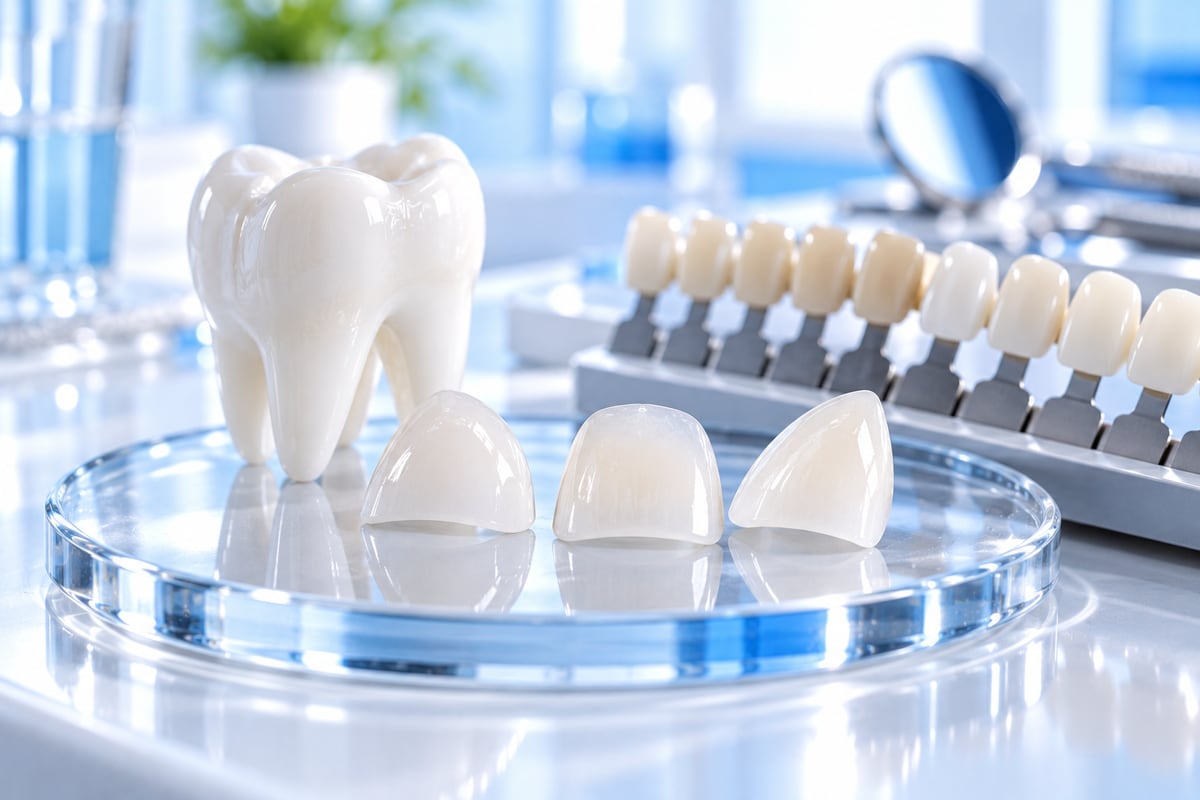
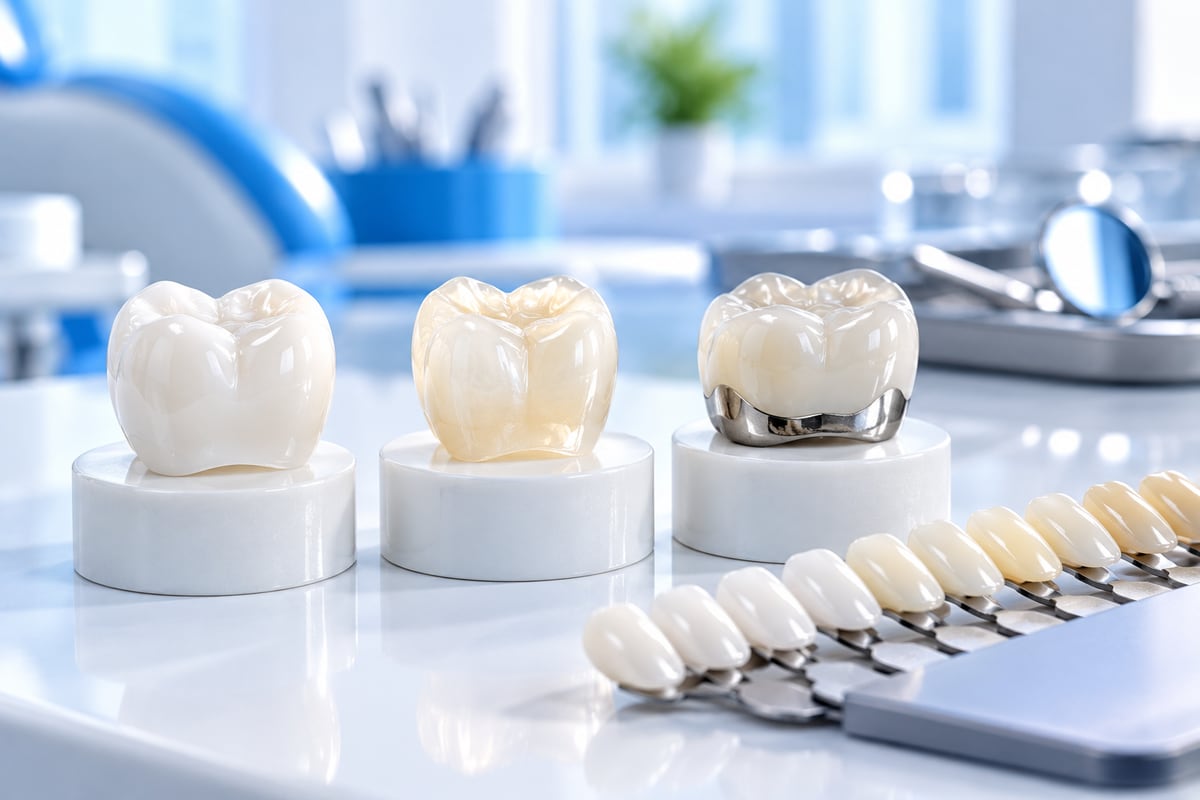
Zirconia is a white ceramic milled from a solid block, combining near-metal strength with an entirely metal-free appearance. High-strength zirconia is less translucent and suits molars and bridges, while newer translucent zirconia approaches glass ceramic aesthetically with slightly less strength. E-max transmits light much like natural enamel, which is why it remains first choice for front teeth and veneers, though it is less fracture-resistant than zirconia under heavy load. Porcelain-fused-to-metal has an inner metal coping for strength beneath a ceramic layer; it remains practical and economical but can show a dark line as gums recede and the ceramic can chip. Full metal crowns are the strongest and most conservative of tooth structure, used for non-visible molars, especially in heavy grinders.
| Type | Strength | Aesthetics | Best for |
|---|---|---|---|
| High-strength zirconia | Excellent | Good | Molars, long bridges |
| Translucent zirconia | Very good | Excellent | Front and back teeth |
| E-max | Good | Best | Front teeth and veneers |
| Porcelain-fused-to-metal | Very good | Moderate | Selected cases, tighter budgets |
| Full metal | Highest | Poor | Non-visible molars |
| Temporary | Low | Acceptable | Between the two visits |
How a crown is made
- 1 Assessment and imaging, choosing the material and explaining alternatives.
- 2 Removing decay, building up the core if needed, and preparing the tooth by a measured amount.
- 3 Recording the impression conventionally or with an intraoral scanner.
- 4 Selecting the shade early in the visit, before the teeth dehydrate and lighten temporarily.
- 5 Fitting a temporary crown to protect the tooth and shape the gum.
- 6 Laboratory fabrication, usually three to seven days.
- 7 Try-in, checking margins, contacts and bite, then cementing with the appropriate material.
- 8 A review about a week later.
Why root-treated teeth need crowns
A root-treated tooth loses its blood supply and much of its structure, and the risk of a vertical root fracture — which usually means losing the tooth — rises sharply. A crown acts as a band that binds the walls together and distributes chewing forces. Long-term studies show substantially better survival for crowned posterior root-treated teeth than for those restored with a filling alone.
What shortens a crown's life
- Grinding without a night guard — the leading cause of early ceramic fracture.
- Chronic gum inflammation and recession exposing the crown margin.
- Neglecting interdental cleaning at the crown margin.
- Biting hard objects, opening packaging with your teeth.
- Skipping check-ups, where decay under a margin is caught on X-ray before it hurts.
Replacing a missing tooth: bridge, implant or denture?
A crown covers an existing tooth; a missing tooth is a different question. A fixed bridge uses the neighbouring teeth as abutments, so both are prepared to carry crowns — fast and surgery-free, but it permanently sacrifices structure in possibly healthy teeth and does nothing to stop bone resorption under the gap. An implant replaces the root itself, preserving bone and leaving the neighbouring teeth untouched, at the cost of a longer timeline and higher initial fee. A removable partial or complete denture remains practical for multiple missing teeth or when implants are not possible, and modern implant-retained overdentures bridge the gap between the two.
| Criterion | Bridge | Implant | Removable |
|---|---|---|---|
| Time to final result | 1–2 weeks | 2–4 months | 2–4 weeks |
| Neighbouring teeth | Fully prepared | Untouched | May need clasps |
| Preserves bone | No | Yes | No |
| Stability | Fixed | Fixed | Less stable |
| Initial cost | Moderate | Higher | Lowest |
The practical rule: if the neighbouring teeth are intact, an implant avoids wasting healthy structure. If they already need crowns because of large fillings or fractures, a bridge solves two problems at once.
Why the crown margin decides everything
The part patients never see or ask about is the most important: the margin where crown meets tooth. A precise, smooth margin in a healthy relationship with the gum can be cleaned and lasts for years. An open, rough or deeply subgingival margin traps bacteria and starts a cycle of inflammation and decay beneath the crown. Healthy gums before impressions are a prerequisite — an impression taken on inflamed, bleeding tissue produces an inaccurate margin. Persistent pain or bleeding around a new crown is not something to get used to; it is a reason to review the margin.
Digital crowns
Intraoral scanning replaces the conventional impression material many patients dislike, producing an accurate 3D model in minutes that goes straight to the laboratory or milling unit. It improves comfort, lets the dentist check the preparation on screen before sending the file, reduces distortion errors and allows same-day delivery in some systems. Technology, however, is a tool and not a substitute for diagnosis: a digital crown over an inaccurate preparation or inflamed gum fails exactly as a conventional one does.
Crowns for children
When decay in a baby tooth is too extensive for a filling, or after pulp treatment, paediatric crowns are used — pre-formed and fitted in a single visit rather than laboratory-made. Stainless steel crowns are the workhorse for baby molars: very durable and invisible in the smile because they sit at the back. White zirconia paediatric crowns are the aesthetic option for front baby teeth. Either way the crown holds the tooth and its space until the permanent successor erupts, reducing later crowding — see our children's dentistry page.
What the cost depends on
- The material — zirconia and e-max cost more than porcelain-fused-to-metal.
- The laboratory: real differences in margin accuracy, shade work and longevity are reflected in price.
- Whether the tooth needs a build-up or a post before the crown.
- The number of units, since a bridge is priced per unit.
- The state of the gums, which may need treatment before impressions.
Crown or veneer?
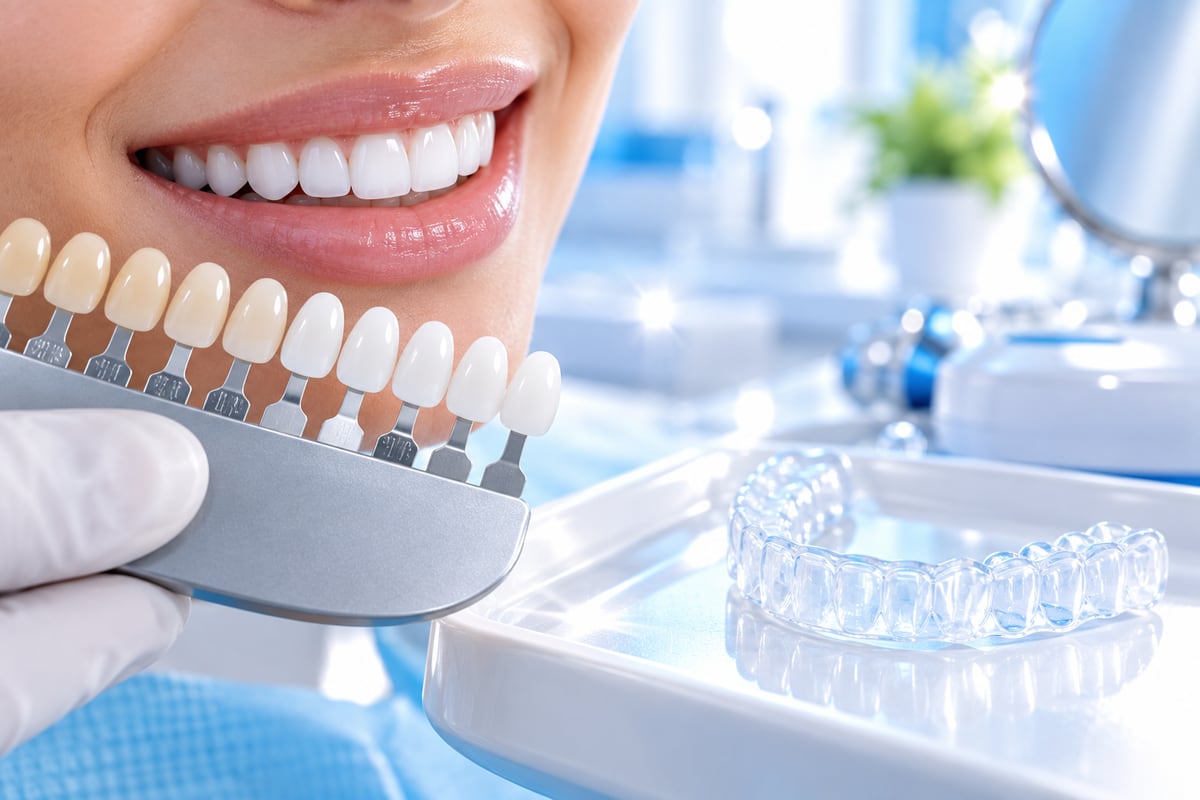
Patients often ask for "work on the front teeth" meaning either a full crown or a veneer, though the two differ fundamentally in how much tooth is removed. A veneer is a thin shell covering only the front surface, prepared minimally — often less than a millimetre — and used when the tooth is functionally sound and the goal is colour, shape or closing a small gap. A crown covers the tooth from every side, needs far more preparation, and is used when the tooth is weakened, fractured, root-treated or has lost much of its structure. The rule is simple: the sounder the tooth, the more conservative the option should be.
Bruxism: the silent enemy of restorations
If one factor destroys good restorations more than any other, it is grinding — involuntary clenching during sleep or under stress. Most sufferers do not know they grind, because it happens while they sleep. Signs include waking with tight or aching jaw muscles, flattened or worn edges on the front teeth, repeated fractures of fillings or restorations without obvious cause, widespread sensitivity without decay, morning temple headaches, and white lines inside the cheeks or scalloped tongue edges.
Placing ceramic in a mouth with untreated bruxism is like putting glass in front of a hammer: grinding forces far exceed normal chewing forces and concentrate on specific points, chipping ceramic, cracking crowns and loosening implants. Correct planning starts with diagnosing the habit, choosing a material that tolerates it (usually zirconia), adjusting the occlusion precisely, and making a night guard to wear once the work is complete. That guard is not a luxury — it costs a fraction of replacing a fractured bridge.
Frequently asked questions
What is the difference between zirconia and porcelain?
Zirconia is a high-strength, metal-free white ceramic milled digitally. "Porcelain" usually refers to porcelain fused to a metal coping. Zirconia is stronger and avoids the grey line at the gum; PFM is less expensive.
Which is best for front teeth?
E-max or translucent zirconia, because their light transmission is closest to natural enamel.
How many visits does a crown take?
Usually two: preparation with a temporary, then fitting three to seven days later. Some digital systems allow same-day delivery in selected cases.
Can crowns be whitened?
No. Whiten first, then match the crown shade to the new colour.
My crown came off — what should I do?
Keep it clean, do not glue it yourself, avoid chewing on that side and book promptly so the tooth underneath can be checked.
The bottom line
Choosing a crown material is not a contest between best and worst but a match between the tooth and its demands. Zirconia wins where strength matters, e-max where appearance leads, and PFM remains practical in selected cases. The factors that matter most, though, never appear in a brand name: preparation accuracy, laboratory quality, gum health and your own maintenance. Always ask your dentist why this particular material for this particular tooth — a clear answer matters more than any name in an advert.
This article is general information for education only and does not replace an examination and diagnosis by a dentist. Every case is different, and the right treatment is decided by your dentist after an examination.
Have a question about your own teeth?
Book an examination at Dental Arts and the dentist will check your teeth and calmly explain the options that suit you.