Whitening is one of the most requested cosmetic treatments, and when it is done properly it can be a simple way to brighten a smile. It is also an area full of online trends, some of which can genuinely harm your teeth. Knowing the difference helps you reach a result you are happy with, safely.
Why teeth change colour
Discolouration generally falls into two types. Surface stains come from things like tea, coffee, some foods and smoking. Deeper discolouration sits inside the tooth and can be linked to ageing, an old injury, certain medicines taken in childhood or too much fluoride while the teeth were forming. Surface stains often improve with a professional cleaning, while deeper colour may need whitening or, in some cases, other cosmetic options.
How supervised whitening works
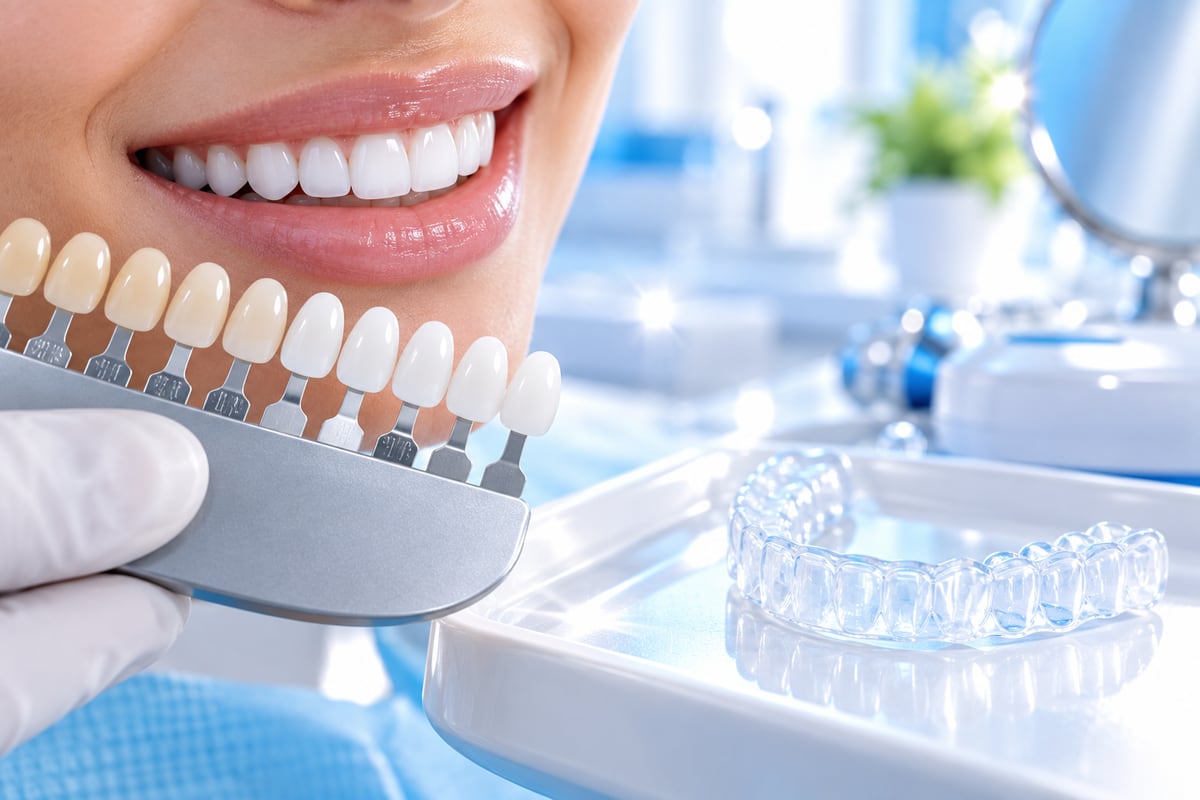
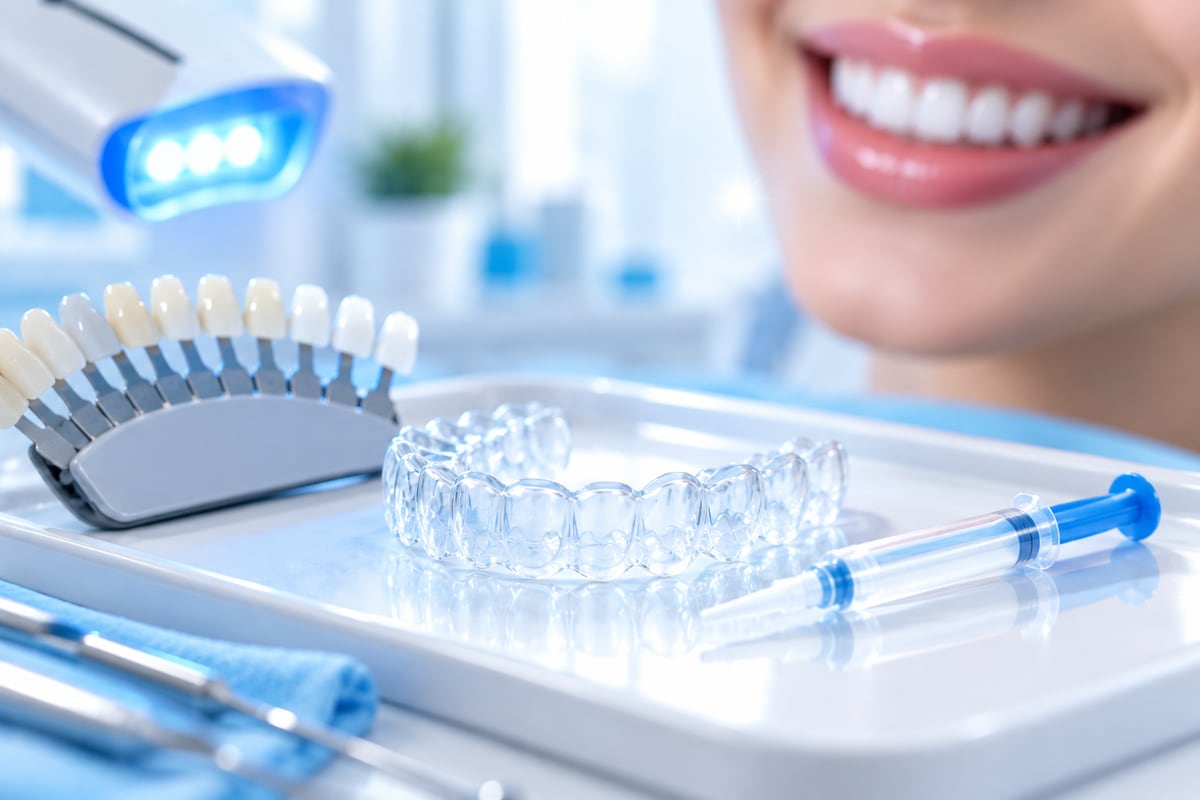
Most whitening products use a peroxide-based gel that lightens the colour inside the tooth. Under a dentist’s supervision this is done either in the clinic, or at home with trays made to fit your teeth and a gel prescribed for you, with clear instructions on how long and how often to use it.
Your teeth and gums should be examined before whitening. Decay, leaking fillings or gum disease need treatment first, because whitening over them can cause pain and further problems.
What to expect
- Results vary from person to person, and the exact final shade is hard to predict.
- Temporary sensitivity or mild gum irritation is common and usually settles once treatment ends.
- Whitening is not permanent. Colour gradually returns, especially with coffee, tea or smoking, and occasional top-ups may be suggested.
- Whitening toothpastes mainly remove surface stains; they do not change the natural colour of the tooth.
What to avoid
- Rubbing teeth with lemon, vinegar or other acids. They dissolve enamel, and lost enamel does not grow back.
- Regular scrubbing with baking soda or charcoal powders. Abrasive products can wear the surface and make teeth look more yellow over time.
- Strong whitening products of unknown origin bought online, or using any product for longer or more often than directed.
- Whitening while you have untreated decay, inflamed gums or sensitive exposed roots.
Whitening is usually not recommended for children and teenagers, and it is generally advised to postpone it during pregnancy and breastfeeding.
Keeping your smile bright
Brushing twice a day with fluoride toothpaste, regular professional cleaning, rinsing with water after coffee or tea and not smoking all help your result last longer. The safest first step is an examination, where your dentist can tell you whether whitening suits your teeth and what result is realistic.
This article is general information for education only and does not replace an examination and diagnosis by a dentist. Every case is different, and the right treatment is decided by your dentist after an examination.
Have a question about your own teeth?
Book an examination at Dental Arts and the dentist will check your teeth and calmly explain the options that suit you.