Toothache is the kind of pain that sends people searching for answers at three in the morning. An inflamed tooth keeps no office hours, and mild sensitivity can turn into a throbbing ache within a few hours. This guide explains which painkiller genuinely works best for dental pain, how to use it safely, what helps at home while you wait for your appointment, and the warning signs that mean a painkiller is no longer the right answer.
Why dental pain is so intense
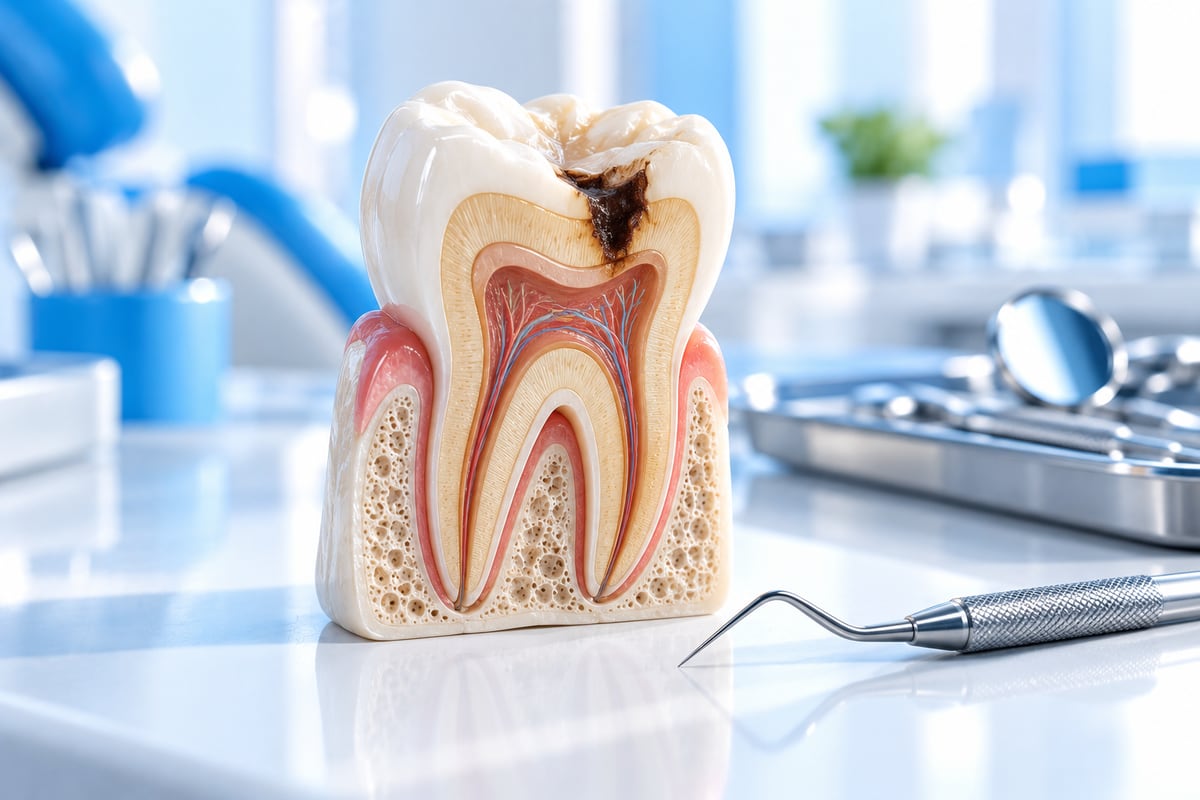
Inside every tooth is a small chamber holding living tissue — the pulp — packed with blood vessels and nerve endings. When that tissue inflames, pressure rises inside rigid walls that cannot expand, and the result is the familiar throbbing that follows your heartbeat. It is also why the pain worsens at night: lying down increases blood flow to the head and raises the pressure further.
Which painkiller is strongest?
Dental pain is one of the most studied pain models in clinical research, and the evidence is consistent: non-steroidal anti-inflammatories, ibuprofen in particular, work best. Ibuprofen blocks the production of prostaglandins, the chemicals that sensitise nerve endings and drive swelling, so it addresses the mechanism rather than only the sensation.
| Painkiller | Usual adult dose | Onset | Notes |
|---|---|---|---|
| Ibuprofen | 400 mg every 6–8 hours | 20–30 minutes | Best for inflammatory dental pain. Take after food. Avoid with active peptic ulcer or advanced kidney disease. |
| Paracetamol | 500–1000 mg every 6 hours | 30–45 minutes | Safest option in pregnancy and with stomach problems. Stay within the daily maximum. |
| Ibuprofen + paracetamol | Both together | 20–30 minutes | The strongest combination available without prescription. |
| Diclofenac | 50 mg every 8 hours | 30 minutes | Effective but harder on the stomach; short-term use only. |
| Topical benzocaine gel | Thin layer on the gum | Minutes | Very short surface relief; not suitable for infants and useless for pulp pain. |
Opioids such as tramadol or codeine are not the automatic "next step up": research in dental pain shows the ibuprofen-plus-paracetamol combination matches or beats many opioid combinations with far fewer side effects.
What helps at home
- 1 Sleep with your head raised on two or more pillows to reduce pressure in the tooth.
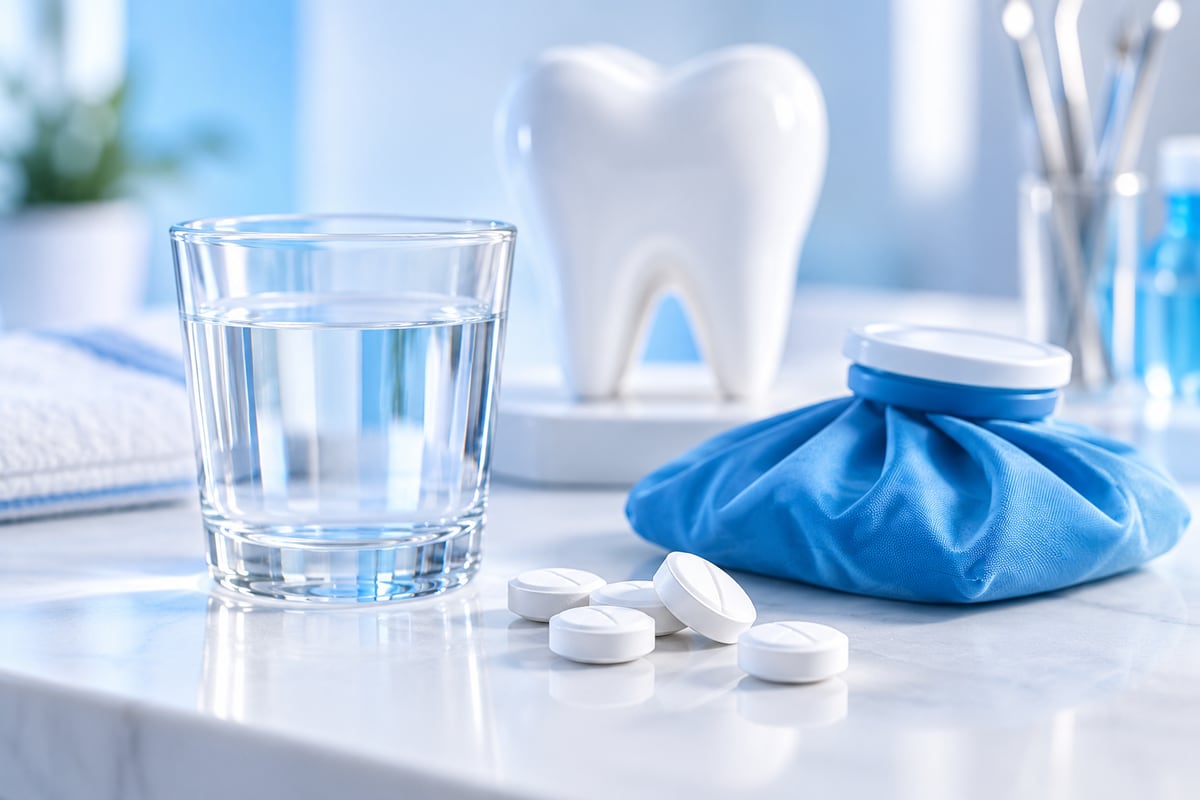
- 2 Apply a cold compress to the cheek for 15 minutes on, 15 minutes off.
- 3 Rinse with warm salt water several times a day.
- 4 Floss gently — trapped food between two teeth is a common cause.
- 5 Avoid chewing on that side and very hot, cold or sweet foods.
- 6 Take painkillers on a regular schedule rather than waiting for the pain to peak.
Avoid placing an aspirin tablet on the gum (it causes a chemical burn), reusing leftover antibiotics, applying heat over a swelling, or trying to drain a swelling yourself.
When a painkiller is not enough
Special situations
In pregnancy, paracetamol is the first choice and anti-inflammatories are avoided, especially in the third trimester; treating a dental infection is safer than leaving it. For children, doses are calculated by weight, aspirin is never given, and the underlying cause should be assessed at a pediatric dental visit. Patients with ulcers, kidney disease, heart disease or on blood thinners should check with their doctor before taking anti-inflammatories.
Prevention
Most severe toothaches began months earlier as small, painless decay. A check-up and cleaning every six months is the cheapest insurance: early decay is a single simple filling, while the same tooth a year later may need a root canal and a crown.
A practical 24-hour pain plan
The most common mistake is not the choice of drug but the timing. Waiting until the pain peaks means the medicine takes longer to work and gives weaker relief. Regular, scheduled doses keep a steady level in the blood and stop the pain from returning in the first place.
| Time | Action | Purpose |
|---|---|---|
| 8 AM | Ibuprofen 400 mg + paracetamol 1000 mg after breakfast | Strong start to the day, taken with food |
| 11 AM | Cold compress 15 minutes + warm salt rinse | Reduce swelling between doses |
| 2 PM | Paracetamol 1000 mg after lunch | Bridge the gap before the next anti-inflammatory dose |
| 4 PM | Ibuprofen 400 mg | Keep a steady anti-inflammatory level |
| 8 PM | Paracetamol 1000 mg + cold compress | Prepare for the night |
| Bedtime | Ibuprofen 400 mg, sleep with head raised | Lower pressure inside the tooth overnight |
What your dentist does to stop the pain
Many patients delay the visit fearing more pain, when in reality a single appointment often ends days of suffering. After local anaesthesia, opening the pulp chamber releases the trapped pressure and brings immediate relief; the canals are then cleaned, disinfected and temporarily sealed. If an abscess is present it is drained — drainage is the treatment, with antibiotics only as an adjunct in selected cases. And when pain follows a recent filling, adjusting a fraction of a millimetre of height usually ends it in minutes.
Pain that feels dental but is not
- Sinusitis: aching upper back teeth on both sides, worse when bending forward, with nasal congestion.
- Jaw joint disorder: pain in front of the ear spreading to the jaw and temple, with clicking and limited opening.
- Muscle pain: diffuse ache after a stressful day or prolonged chewing, not linked to one tooth.
- Trigeminal neuralgia: brief electric-shock attacks triggered by light touch or a draught of air.
- Referred cardiac pain: rarely, angina presents in the lower jaw — with breathlessness or sweating this is a cardiac emergency.
How long does untreated toothache last?
The pain may fade, but the problem does not. When the pulp finally dies the ache often disappears, and patients assume they are cured. Bacteria then spread from the canal into the bone around the root, forming a silent lesion that resurfaces weeks or months later as an abscess or sudden swelling. By then the treatment is longer, harder and more expensive — sometimes an extraction followed by an implant. Booking an examination within days of the first pain is both the healthier and the cheaper decision.
Frequently asked questions
What is the strongest painkiller for toothache?
In practice, ibuprofen 400 mg combined with paracetamol 500–1000 mg gives the strongest over-the-counter relief for dental pain, provided you have no medical contraindication.
Can I take ibuprofen and paracetamol together?
Yes, in most cases. They work by different mechanisms and can be taken together or alternated, as long as you stay within each drug's daily maximum.
Do antibiotics relieve toothache?
No. They treat bacterial infection in specific situations such as spreading swelling or fever, but they do not relieve pain or replace treating the cause.
The pain stopped suddenly — am I fine?
Not necessarily. Sudden relief after severe pain can mean the nerve has died; the problem continues silently and may become an abscess. Have it checked.
Can I take a painkiller before my dental appointment?
Yes. It does not prevent diagnosis — just tell your dentist what you took and when.
The bottom line
The strongest available option is ibuprofen combined with paracetamol, used within safe limits. But a painkiller only buys time: toothache is a signal of inflammation or infection that needs treatment, and every day of delay makes care longer and more expensive. If the pain lasts more than a day or returns as soon as the dose wears off, book an examination.
This article is general information for education only and does not replace an examination and diagnosis by a dentist. Every case is different, and the right treatment is decided by your dentist after an examination.
Have a question about your own teeth?
Book an examination at Dental Arts and the dentist will check your teeth and calmly explain the options that suit you.