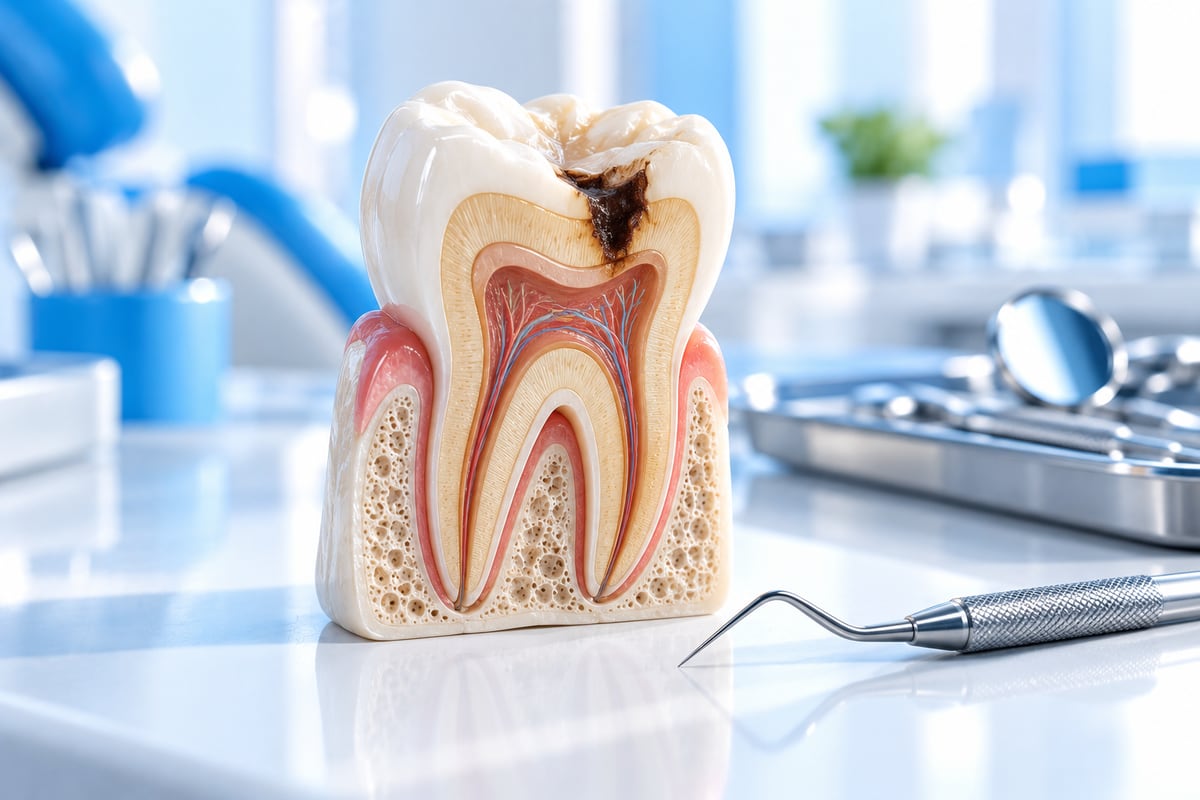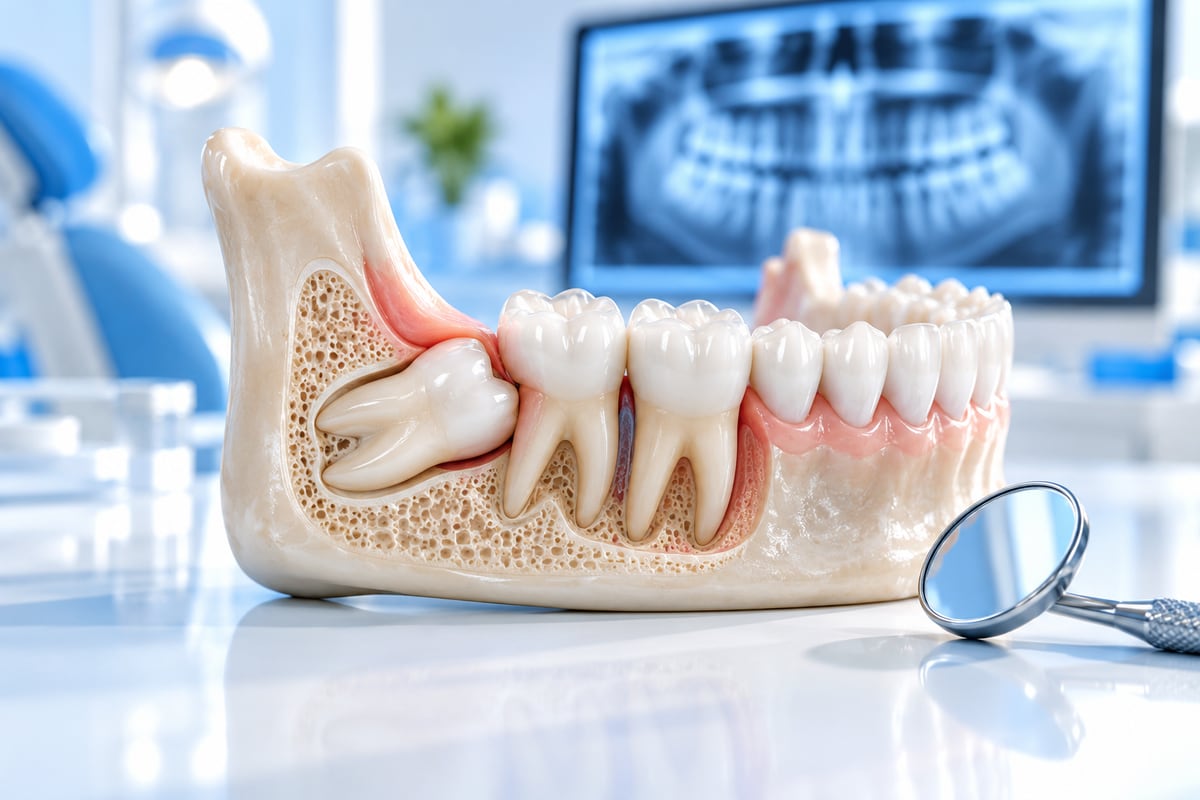
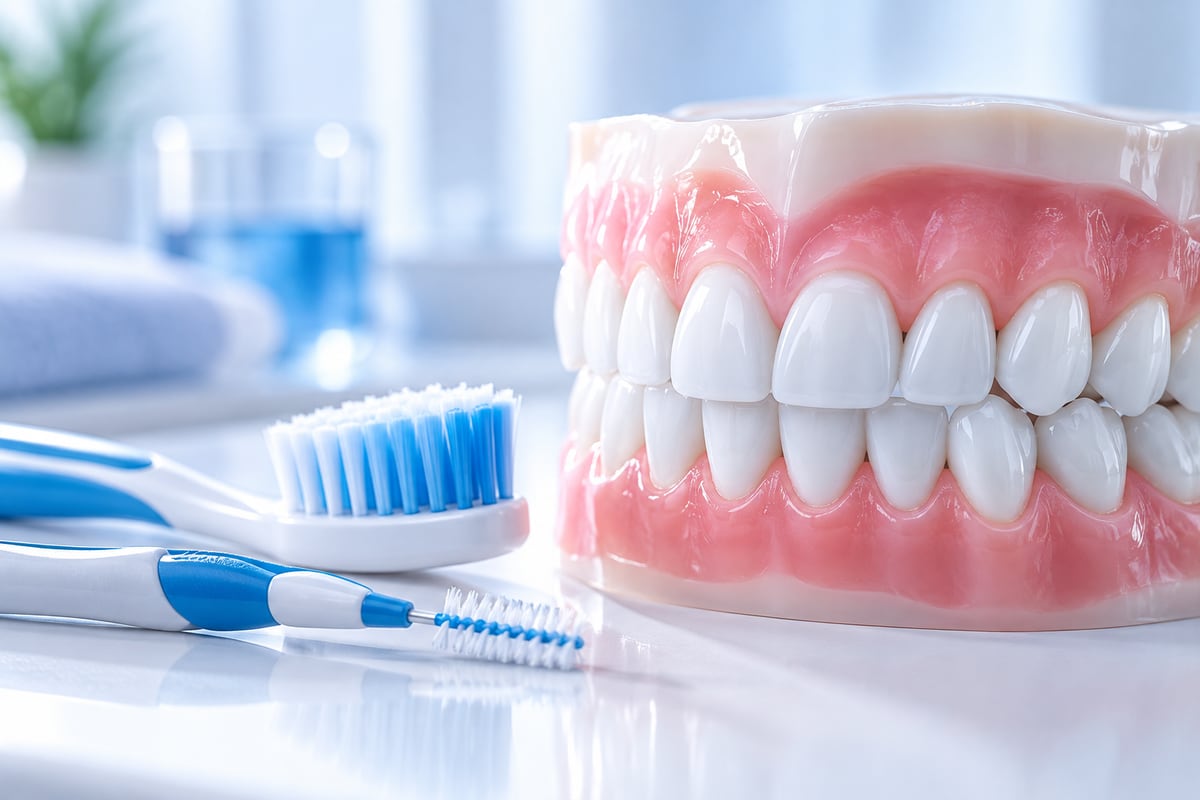
Gum disease is one of the most common conditions in humans and one of the most ignored, because it starts quietly: a spot of blood on the brush, slight redness, morning breath. No pain, nothing alarming. That is exactly what makes it dangerous — pain arrives very late, after bone supporting the teeth has already been lost. This guide explains how inflammation starts, how to tell a fully reversible stage from one that needs specialist care, and what genuinely works at home.
Gingivitis or periodontitis?
| Gingivitis | Periodontitis | |
|---|---|---|
| Tissues affected | Surface gum only | Gum, bone and supporting ligament |
| Bone loss | None | Present and visible on X-ray |
| Pockets | Normal (1–3 mm) | Deep (4 mm or more) |
| Tooth mobility | No | Starts in moderate and advanced stages |
| Reversibility | Complete healing possible | Can be stopped; lost bone does not return on its own |
Why gums become inflamed
Plaque forms within hours of cleaning; left for two to three days it hardens into calculus that a brush cannot remove. The rough surface then collects more bacteria whose toxins drive the inflammation. Smoking is the biggest modifiable risk factor — it reduces blood flow, hides bleeding and lets the disease advance silently. Uncontrolled diabetes, hormonal changes, certain medications, dry mouth and poorly contoured fillings all increase risk.
Treatment in the clinic
Scaling and polishing is the foundation and has no home substitute. Where deep pockets exist, root surface debridement under local anaesthesia is carried out over one to four visits. Pockets are re-measured four to six weeks later; most cases improve enough to move on to a three- to six-monthly maintenance programme, while a minority need minor surgical access. Contributing factors are corrected too: a filling with a poor margin, crowding that prevents cleaning, blood sugar control and smoking cessation.
What works at home
- 1 Angle the brush 45 degrees toward the gum line, not just at the tooth.
- 2 Use small circular or short vibratory strokes, one or two teeth at a time.
- 3 Brush for two full minutes twice a day, most importantly before bed.
- 4 Use a soft brush — harder bristles cause recession, not cleaner teeth.
- 5 Clean between the teeth daily with floss or an interdental brush.
Warm salt water rinses help during flare-ups. Chlorhexidine 0.12% is very effective but is prescribed for a limited period because of staining. No mouthwash removes attached plaque, and no home remedy removes calculus.
Gums and the rest of the body
The link with diabetes runs both ways: high blood sugar worsens gum inflammation, and chronic gum inflammation makes glycaemic control harder. Advanced gum disease is associated with cardiovascular risk, and untreated periodontitis in pregnancy has been linked with preterm birth and low birth weight — which is why cleaning during pregnancy is not only safe but recommended.
Recovery timeline
| Time | What to expect |
|---|---|
| First 24 hours | Mild sensitivity, perhaps slight bleeding |
| 3–7 days | Noticeably less bleeding and redness |
| 2–3 weeks | Gums pink and firm again — gingivitis resolved |
| 4–6 weeks | Pockets re-measured after deep cleaning |
| 3–6 months | Maintenance visit, interval set by risk level |
Understanding the numbers your dentist calls out
During a gum examination your dentist measures the pocket depth around each tooth in millimetres with a graduated probe. Those numbers define the stage and the treatment.
| Pocket depth | Meaning | Usual action |
|---|---|---|
| 1–3 mm, no bleeding | Healthy gums | Routine cleaning every six months |
| 1–3 mm with bleeding | Reversible surface inflammation | Scaling and better daily routine |
| 4–5 mm | Early attachment and bone loss | Deep cleaning and re-evaluation |
| 6–7 mm | Moderate to advanced periodontitis | Deep cleaning, possibly limited surgery |
| Over 7 mm | Advanced bone loss | Specialist plan and prognosis assessment |
A toothbrush reaches barely three millimetres below the gum margin, so deeper pockets cannot be cleaned at home no matter how diligent you are — professional cleaning becomes a mechanical necessity, not a luxury.
Other forms of gum disease
Acute ulcerative gingivitis appears suddenly with ulcers between the teeth, spontaneous bleeding and a distinctive odour, and is one of the few gum conditions where antibiotics may be prescribed. Some medications for epilepsy, blood pressure and immunosuppression cause gum overgrowth. Recession exposes root surfaces and causes sensitivity, usually from aggressive brushing or chronic disease. Peri-implantitis affects the tissues around an implant and can end in its failure, which is why six-monthly maintenance is part of implant treatment itself.
Why smoking misleads you
Smokers often say their gums never bleed and take that as a sign of health. The opposite is true: nicotine constricts blood vessels, masking bleeding while inflammation and bone loss continue underneath. Smokers are therefore diagnosed late, respond less well to treatment, heal more slowly and face a higher risk of implant failure. Quitting measurably improves the response within months.
Which cleaning tools are worth buying?
- Electric brushes remove slightly more plaque and reduce inflammation better over time, especially for orthodontic patients and anyone who struggles with brushing technique.
- Water flossers help greatly around braces, bridges and implants, but complement rather than replace floss or interdental brushes.
- Interdental brushes beat floss where spaces exist — the right size matters, and your dentist can select it in a minute.
- Special gum toothpastes may help as an adjunct, but no paste removes calculus or treats a deep pocket.
Children and teenagers
Puberty raises hormone levels and makes gums react more strongly to the same amount of plaque, so redness and bleeding appear even with average hygiene. Supervise brushing until at least age seven or eight, pay extra attention to teenagers in braces, and treat bleeding gums in a child as a reason for a pediatric dental visit, not something to wait out.
Severe gum inflammation: a realistic 48-hour plan before your appointment
- 1 Rinse with warm salt water after every meal and before bed, holding it over the area for twenty seconds.
- 2 Keep cleaning the inflamed area gently with a soft brush despite the bleeding — leaving plaque makes it worse.
- 3 Use floss carefully to remove any trapped food, a common cause of sudden local swelling.
- 4 Apply a cold compress externally if the cheek is swollen, 15 minutes on and off.
- 5 Take an appropriate anti-inflammatory painkiller if you have no contraindication.
- 6 Stop smoking during this period — nothing blunts the gum response more.
- 7 Avoid hard, spicy, very hot or very cold food on that side.
Diet and gums
No food cures gum disease, but some patterns support healing and others work against it. Vitamin C is essential for collagen in gum tissue; vitamin D and calcium support the supporting bone; omega-3 has a mild anti-inflammatory effect. On the other side, the frequency of sugar matters more than the quantity, and acidic soft drinks erode enamel and worsen sensitivity where gums have receded. Adequate water keeps saliva flowing — the mouth's first natural defence.
Frequently asked questions
Can gum inflammation be cured at home?
Early surface inflammation improves greatly with correct brushing at the gum line, daily interdental cleaning and salt rinses — but if calculus has formed, it must be removed professionally first or nothing else will work.
Why do my gums bleed when I brush?
Bleeding indicates inflammation from plaque at the gum line. It is not caused by brushing too hard in most cases, and the answer is better, gentler, more regular cleaning — not stopping.
Does scaling damage teeth?
No. The instrument removes deposits from the tooth surface without cutting enamel.
Do antibiotics treat gum disease?
Not in ordinary cases. Treatment is mechanical removal of plaque and calculus; antibiotics are reserved for specific severe forms, on prescription.
When is gum surgery needed?
When deep pockets persist after non-surgical treatment, or when bone and gum contours prevent effective cleaning.
The bottom line
Gum disease begins with a signal that is easy to ignore. Responding early means one cleaning visit, a simple daily routine and full recovery. Ignoring it for years means lost bone, loose teeth and longer, costlier treatment with smaller gains. Your gums are the foundation your teeth stand on — no cosmetic work is worth building on an inflamed one.
This article is general information for education only and does not replace an examination and diagnosis by a dentist. Every case is different, and the right treatment is decided by your dentist after an examination.
Have a question about your own teeth?
Book an examination at Dental Arts and the dentist will check your teeth and calmly explain the options that suit you.