Baby teeth may be temporary, but they do important work. They help your child chew, speak clearly and smile with confidence, and they hold space for the permanent teeth that come later. Decay in baby teeth can cause pain and infection and may affect the adult teeth developing underneath, so good care from the very start really matters.
When should the first visit be?
A common recommendation is to book the first dental visit when the first tooth appears, or by your child’s first birthday. This early visit is usually short and relaxed. It is a chance for the dentist to check how the teeth and gums are developing, and for you to ask about brushing, feeding, teething and habits such as thumb sucking.
Starting early also means your child gets to know the dental clinic at a time when nothing hurts, which makes later visits much easier.
Caring for baby teeth at home
- Before teeth appear, you can gently wipe your baby’s gums with a clean, damp cloth.
- Once the first tooth comes through, brush twice a day with a small, soft children’s toothbrush.
- Use a smear of fluoride toothpaste, about the size of a grain of rice, for children under three, and a pea-sized amount from around three years old.
- Encourage your child to spit the toothpaste out rather than swallow it, without rinsing heavily.
- Help with brushing until your child can do it well alone, often at around seven or eight years old.
Food and drink habits that protect teeth
- Avoid putting your child to bed with a bottle of milk or juice. Liquid pooling around the teeth overnight is a common cause of early decay.
- Offer water between meals, and keep sweets and sugary drinks to mealtimes.
- Juice is not necessary for young children; if you give it, keep it small and with meals.
- Once teeth have appeared, wipe them after night feeds when you can.
Preparing your child for the visit
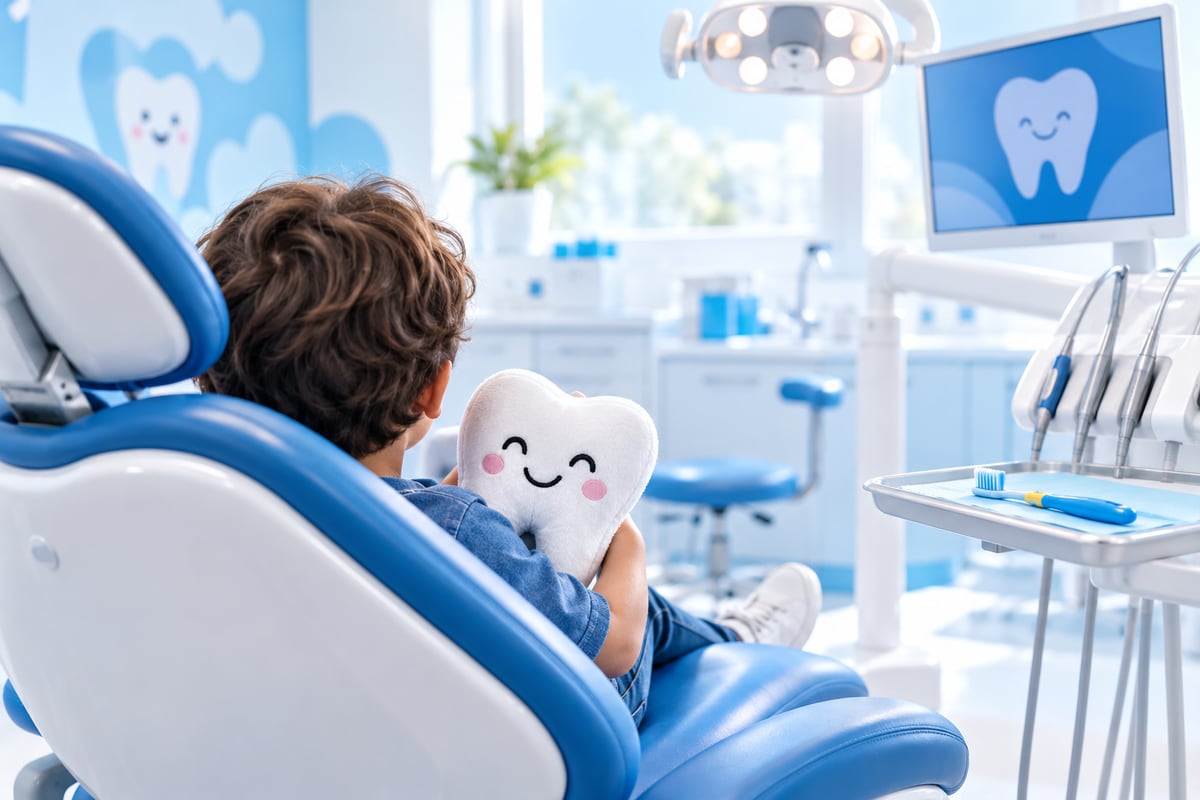
Children pick up on how adults feel, so keep the tone calm, simple and positive, for example that the dentist will count their teeth and check they are healthy. Avoid words that might sound scary, and never use the dentist as a threat. Reading a picture book about the dentist, playing “dentist” at home, and choosing a time when your child is rested and not hungry can all help.
It is normal for a child to feel nervous. A gentle, patient approach and short visits help children build trust step by step.
When to book sooner
Contact the dentist without waiting for a routine visit if your child has toothache, swelling in the gum or face, visible dark spots or holes in the teeth, or a chipped or knocked tooth after a fall.
This article is general information for education only and does not replace an examination and diagnosis by a dentist. Every case is different, and the right treatment is decided by your dentist after an examination.
Have a question about your own teeth?
Book an examination at Dental Arts and the dentist will check your teeth and calmly explain the options that suit you.