
You leave the clinic with gauze in your mouth and a short list of instructions, and an hour later the real questions start: when do I take the gauze out? Is this bleeding normal? What can I eat? The success of an extraction is not decided only in the chair — it is decided in the 48 hours that follow. Most complications we see, dry socket above all, come from small avoidable actions.
The first hour: gauze and the clot
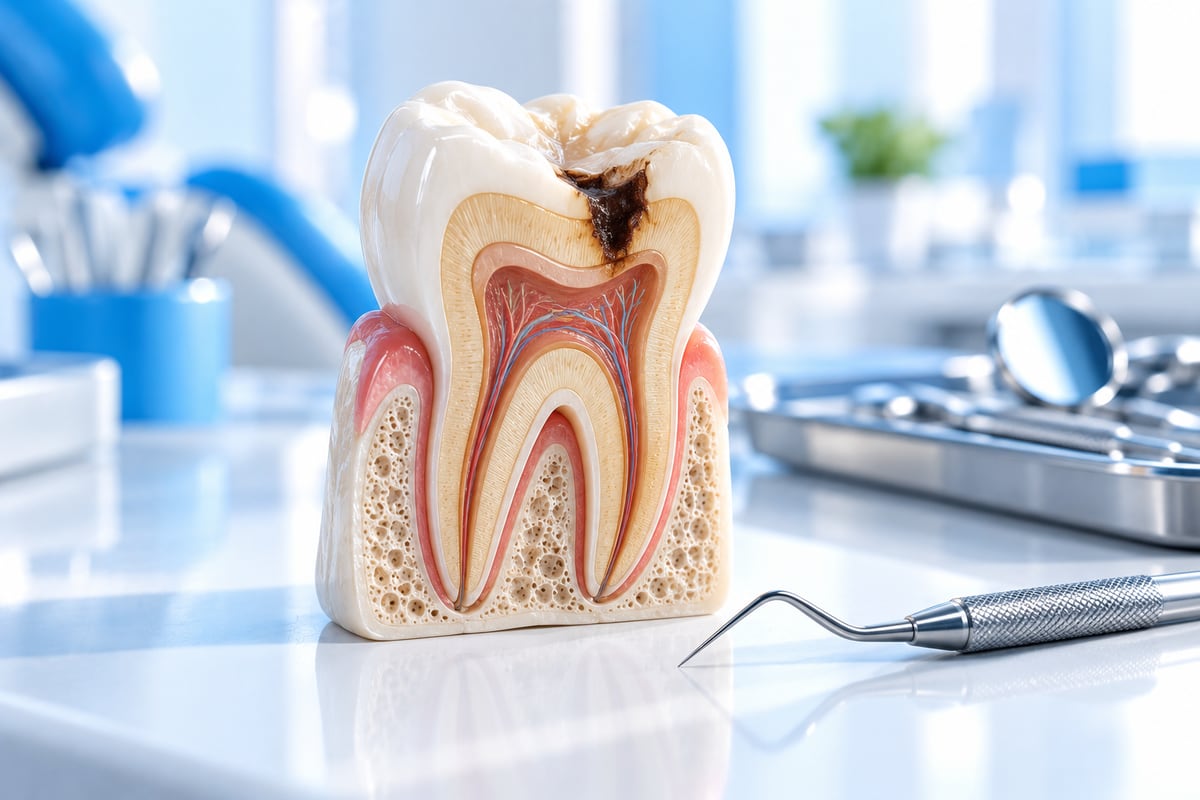
The gauze is not there to soak up blood; it applies steady pressure so bleeding stops and a blood clot forms inside the socket. That clot is the biological dressing protecting exposed bone and nerve endings, and everything else is built on it. Bite steadily for 30 to 60 minutes, then remove the gauze slowly. If bleeding continues, place fresh gauze and bite for another 30 minutes; a damp cold black tea bag also helps, as its tannins aid clotting.
First 24 hours: what not to do
- No rinsing or mouthwash at all on day one.
- No spitting — let saliva flow or swallow gently.
- No drinking through a straw; suction pulls the clot out.
- No smoking or shisha — suction, heat and chemicals all harm healing.
- No exercise or heavy lifting, as raised blood pressure restarts bleeding.
- No hot food or drinks on the first day.
- Sleep with your head raised on two pillows.
Swelling timeline
| Time | Expected | Action |
|---|---|---|
| First 24 hours | Swelling starts, light oozing | Intermittent cold compresses, head raised |
| Days 2–3 | Peak swelling, possible bruising | Cold on day two, then switch to warm |
| Days 3–5 | Clear reduction | Warm compresses aid drainage |
| Days 5–7 | Most swelling gone | Gradual return to normal activity |
| Week 2 | Surface healing complete | Review and suture removal if needed |
Eating and drinking
Aim for adequate nutrition with minimal contact with the socket: cool soft foods for the first day, then soft solids, chewing on the opposite side throughout. Avoid seeds and small grains that can lodge in the socket, keep well hydrated, and avoid straws for a full week.
Dry socket
Dry socket occurs when the clot is lost early, exposing bone and nerve endings. The pain is severe, starts two to four days after the extraction after an initial improvement, radiates to the ear or temple, comes with a bad taste and odour, and does not respond to usual painkillers. Smokers are by far the highest-risk group. Treatment is simple and effective — irrigation and a medicated dressing in the clinic — and relief is usually almost immediate. There is no home treatment.
Wisdom tooth extraction
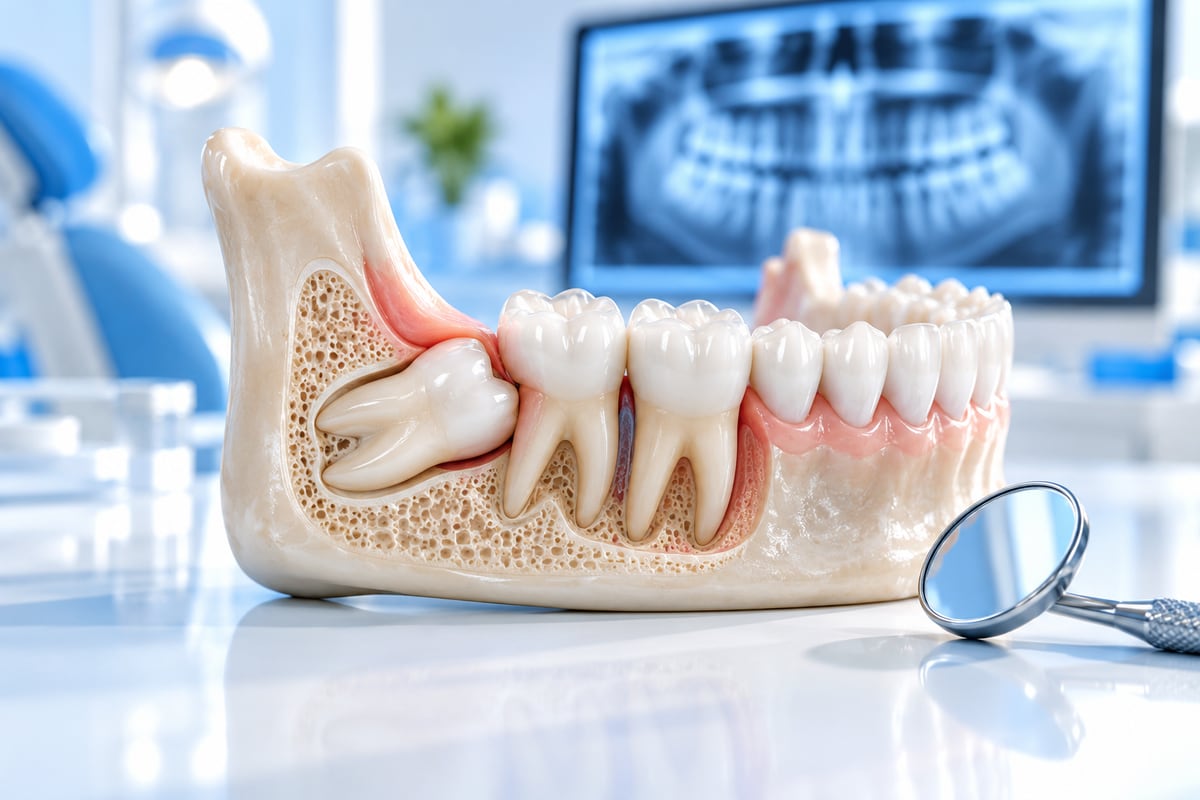
Surgical removal of an impacted wisdom tooth brings more swelling, possible sutures and temporary difficulty opening the mouth. These are expected and improve over a week. Rare temporary numbness of the lip or tongue should be reported and followed up.
Do not leave the gap for years
Bone in the area of a missing tooth resorbs once it loses functional loading, neighbouring teeth drift and the opposing tooth over-erupts. Years later this complicates any replacement. Discuss options early: dental implants preserve bone and do not involve the neighbouring teeth, a fixed bridge is an alternative, and the right choice depends on bone, gums and the number of missing teeth.
Day-by-day recovery
| Day | Inside the socket | How you feel | What to do |
|---|---|---|---|
| Day 0 | The blood clot forms | Numbness, then increasing mild pain | Bite on gauze, early painkiller, cold compresses, no rinsing |
| Day 1 | Clot stabilises | Swelling begins, moderate pain, light oozing | Cool soft food, gentle salt rinses start |
| Days 2–3 | Granulation tissue forms | Peak swelling, pain starts to ease | Warm compresses, continue soft diet |
| Days 4–5 | Socket fills with new tissue | Clear improvement | Gradually firmer foods |
| Days 6–7 | Surface gum coverage | Most symptoms gone | Full brushing near the area |
| Weeks 2–3 | Tissue matures, sutures removed | Comfortable | Review and plan replacement |
| Months 2–4 | Bone fills the socket | No symptoms | Suitable time to assess an implant |
The golden rule when monitoring yourself: the direction matters more than the intensity. Moderate pain that decreases daily is a good sign; milder pain that increases day by day is not.
Common mistakes that delay healing
- Using mouthwash on the first day, believing it disinfects — the rinsing itself dislodges the clot.
- Stopping the painkiller after one dose because the pain eased.
- Not eating at all for a day, which weakens you and worsens dizziness, especially with diabetes.
- Inspecting and touching the socket repeatedly.
- Resuming smoking on day two — the behaviour most strongly linked to dry socket.
Sutures
Not every extraction needs stitches. Dissolvable sutures disappear over one to three weeks, and a small piece coming away with food is normal. Non-dissolvable ones are removed after seven to ten days in a quick, usually painless visit. Never pull at a suture, even if it feels loose.
Specific patient groups
Older patients heal a little more slowly and often take several medications, so a medication review before extraction matters — particularly bisphosphonates used for osteoporosis or in some cancer treatment, which are linked to a rare but serious jaw complication. For children, the main risk is biting the lip or cheek while still numb, so supervise them until sensation returns. Tell your dentist about every long-term medication before any surgical procedure, however simple it looks.
Can an infected tooth be extracted while inflamed?
Many people have heard that an inflamed tooth cannot be removed. Modern practice is more nuanced: removing the source of infection is usually the fastest way to end it, and leaving it in place on antibiotics alone simply delays resolution. Your dentist may still stabilise things first when there is extensive swelling or fever, when limited mouth opening prevents safe access, when severe acute inflammation makes anaesthesia difficult, or when a medical condition needs preparation such as blood-sugar control or adjustment of anticoagulants.
Bleeding: normal versus not
A very small amount of blood mixed with saliva looks like far more than it is. Pink-tinged saliva for a few hours and a spot on the pillow overnight are normal. Bright red blood that fills the mouth within minutes, bleeding that continues after two hours of proper pressure, or heavy bleeding that restarts after stopping completely are not.
- 1 Fold clean gauze (not cotton wool) and place it directly over the socket.
- 2 Bite firmly for a full 30 minutes without opening to check.
- 3 Sit upright rather than lying down, and avoid talking and movement.
- 4 If it persists, bite on a damp, squeezed, cool black tea bag for 20 minutes.
- 5 Avoid hot drinks and exertion during this time.
- 6 If it still does not stop, call the clinic — a suture or a local haemostatic agent may be needed.
Medication timing
Start the painkiller about half an hour before the anaesthetic wears off and keep to regular intervals for the first 48 hours; chasing the pain is far less effective than staying ahead of it. Take antibiotics only if prescribed and complete the course, begin any antiseptic rinse the following day rather than the same day, and continue your usual long-term medications unless told otherwise.
Getting back to normal
Most patients return to desk work the next day, or after two to three days following surgical removal of a wisdom tooth. Heavy physical work should wait three days, strenuous exercise 72 hours, flying ideally 48 hours, and swimming or diving a week. Smoking should wait at least a week — it remains the single biggest risk factor for dry socket.
Frequently asked questions
When do I remove the gauze?
Bite firmly for 30 to 60 minutes and then remove it gently. If bleeding continues, use fresh gauze for another 30 minutes. Do not lift it every few minutes.
How long does bleeding last?
Light oozing with saliva for several hours is normal, including a spot on the pillow the first night. Heavy bleeding beyond two hours despite pressure needs a call to the clinic.
When can I rinse with salt water?
From the day after the extraction, very gently, after meals and before bed — never on the day itself.
Can I smoke afterwards?
Avoid it for at least 72 hours, ideally a week. Smoking is the leading cause of dry socket.
What is the best painkiller after an extraction?
Ibuprofen combined with paracetamol suits most patients, ideally started before the anaesthetic wears off, unless you have a contraindication.
The bottom line
Extraction is routine, but the outcome is made at home. Bite on the gauze for an hour, protect the clot for the first 24 hours, use cold then warm compresses at the right times, and start pain relief early rather than late. If the pain eases day by day you are on track; if it escalates after day three, call your dentist instead of increasing the dose.
This article is general information for education only and does not replace an examination and diagnosis by a dentist. Every case is different, and the right treatment is decided by your dentist after an examination.
Have a question about your own teeth?
Book an examination at Dental Arts and the dentist will check your teeth and calmly explain the options that suit you.